


Team overview
By Richard Farley | @richardfarley |
If Bolivia wasn’t a complete basket case, Copa Centenario would be a nostalgic experience for a team who last qualified for a major tournament when the United States hosted the World Cup in 1994 (South American teams don’t have to qualify for Copa). Since then, though, La Verde has never finished higher than seventh place in South American World Cup qualifying, and in the last three cycles, Bolivia’s finished in the region’s bottom two.
Historically, Bolivia has just been bad, but recently, the federation’s added chaotic to its ineptitude. After earning a shock place in the knockout stage of last summer’s Copa America (despite a -4 goal difference in group), Bolivia fire its coach, unsuccessfully tried to appoint another, settled on a renown ex-player then saw two of the squad’s stars prematurely retire. Bolivia’s gone full Bolivia, just in time for its North American tour.
On the field, La Verde has only one win in six games in CONMEBOL’s 10-team, 18-round World Cup qualifying tournament. Already seven points from survival, Bolivia continues to be known for its heights off the field rather than on. At just under 12,000 feet, Estadio Hernando Siles in La Paz is one of the highest places in the world where high-level soccer is played, with concerns over player health leading FIFA to, in 2007, temporarily ban World Cup qualifying matches from being played in the country.

Key player
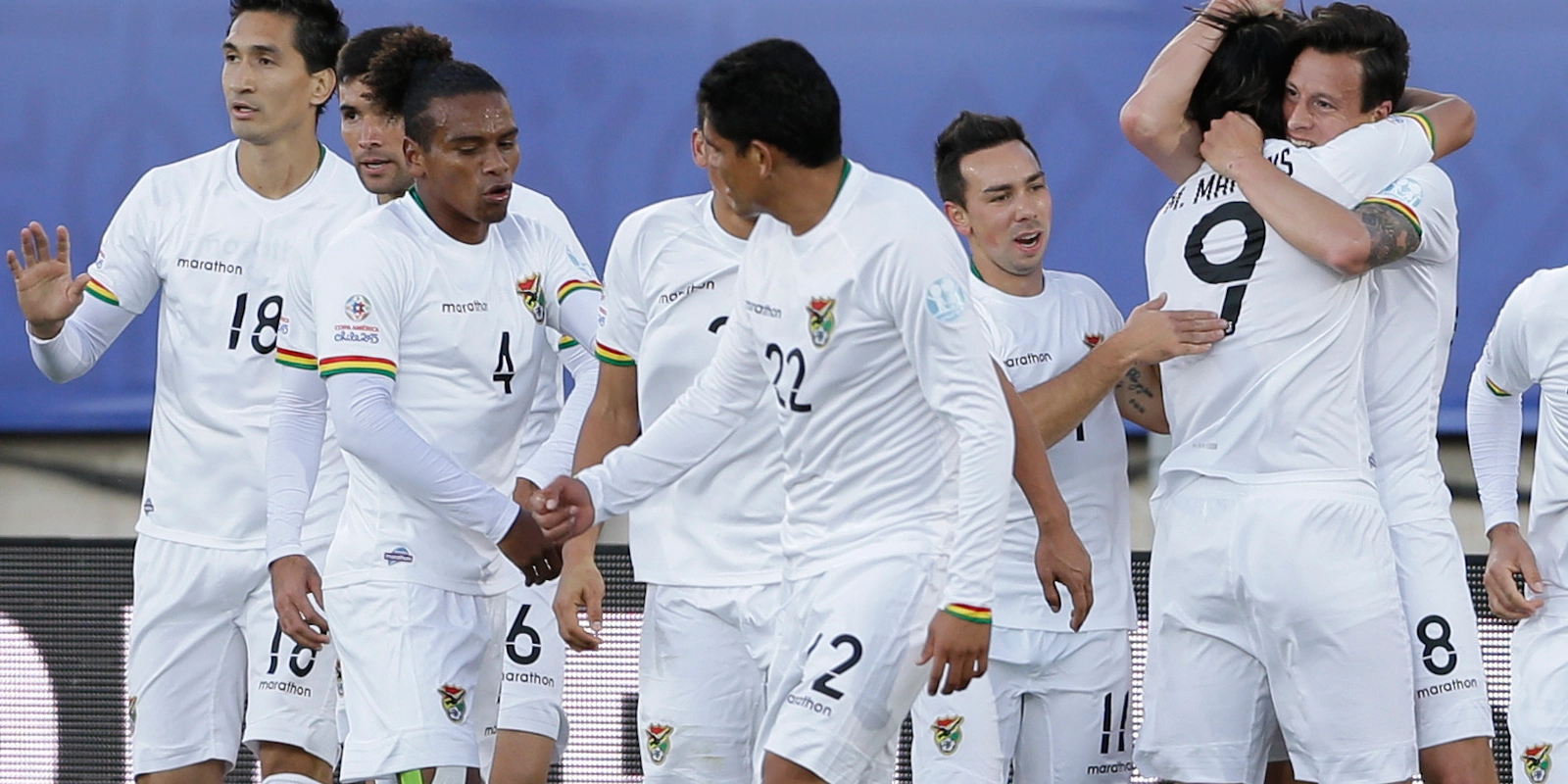
What to do about Marcelo Martins? Clearly Bolivia’s most talented player, Martins retired from international soccer last September, reportedly because of differences with Julio Cesar Baldivieso. Apparently hoping Martins will reconsider, Bolivia included the former Shakhtar Donetsk attacker in its preliminary squad. Martins, however, confirmed his intension to sit out, telling reporters last week “[I] want to play in Copa Centenario, but for now I won’t, because I do not share the same philosophy as the person in charge of the squad.”
In addition to his time at Shakhtar, Martins -- currently playing for Changchun Yatai in China -- has been on the books of Cruziero, Werder Bremen, Wigan Athletic (during its Premier League incarnation), Gremio and Flamengo. Born in Bolivia but with a Brazilian father, Martins was brought up through Vitoria’s youth system and was part of the Brazil’s youth national teams at U-18 and U-20 levels. In September 2007, one month past his 20th birthday, he chose to make his full international debut for his mother’s country.
The most expensive Bolivian in soccer history (Shakhtar paid $14 million to get him from Cruziero in 2008), Martins is his national team’s most experienced and most prolific player. At 28, he has 54 international appearances, most among those in Baldivieso’s preliminary squad, and his 14 international goals make him the only potential La Verde player in double digits for his career.
For a squad that’s made up almost exclusively of players from the Bolivian league, Martins is the standout talent. He scored two of the team’s three goals at last year’s Copa. Without him, Bolivia’s chances of going goalless at the Centenario increase dramatically.

Manager snapshot
With 85 caps as a player, Baldivieso is a national team legend, one who translated elite technical talents into stints in Argentina, Japan, Ecuador, Chile, Saudi Arabia, Qatar and Venezuela. Eight years ago, he made the slow transition into management, albeit controversially; he left his first club job after giving his 12-year-old son a professional debut.
In August last year, after the team’s surprise run to Copa’s knockout round, Baldivieso took over as head coach. Within weeks, the team was on the wrong end of a 7-0 drubbing by Argentina and was dealing with the premature retirements of Martins and captain/center back Ronald Raldes.
That Baldivieso is even in the job is a minor miracle, considering the chaos that came before. In the wake of Copa, Bolivia sacked head coach Marcelo Soria, attempted to re-hire him, then tried to appoint Spaniard Miguel Angel Portugal, only to see his hiring rejected by the country’s power-holding clubs. Baldivieso eventually stepped in and, perhaps predictably, the floor fell out from under him.

Success looks like
Bolivia has no meaningful record of success against Argentina and Chile, the clear powers in a top-heavy Group D. The team’s last win against Argentina came amid Diego Maradona’s first games managing the Albiceleste’s chaotic 2010 World Cup qualifying run. In 37 all-time meetings, Argentina has never lost to La Verde outside of Bolivia.
Chile has posted a similar mark, having lost to Bolivia away from La Paz only once, 22 years ago. That leaves Panama, a team against whom, playing in North America, Bolivia should still be considered underdogs. Three points from the Canaleros is Bolivia’s realistic best-case scenario.

Failure looks like
Three games, three loses, none of which are particularly close. Chile won its last meeting with Bolivia, 5-0. Argentina has outscored La Verde 14-0 in the teams’ last three meetings. A win over Panama in Orlando (June 6) wouldn’t be a shock, but it’s also possible Bolivia returns home nine days later goalless, pointless, and at the bottom of its group.
