


Team Overview
By Scott French | @ScottJFrench |
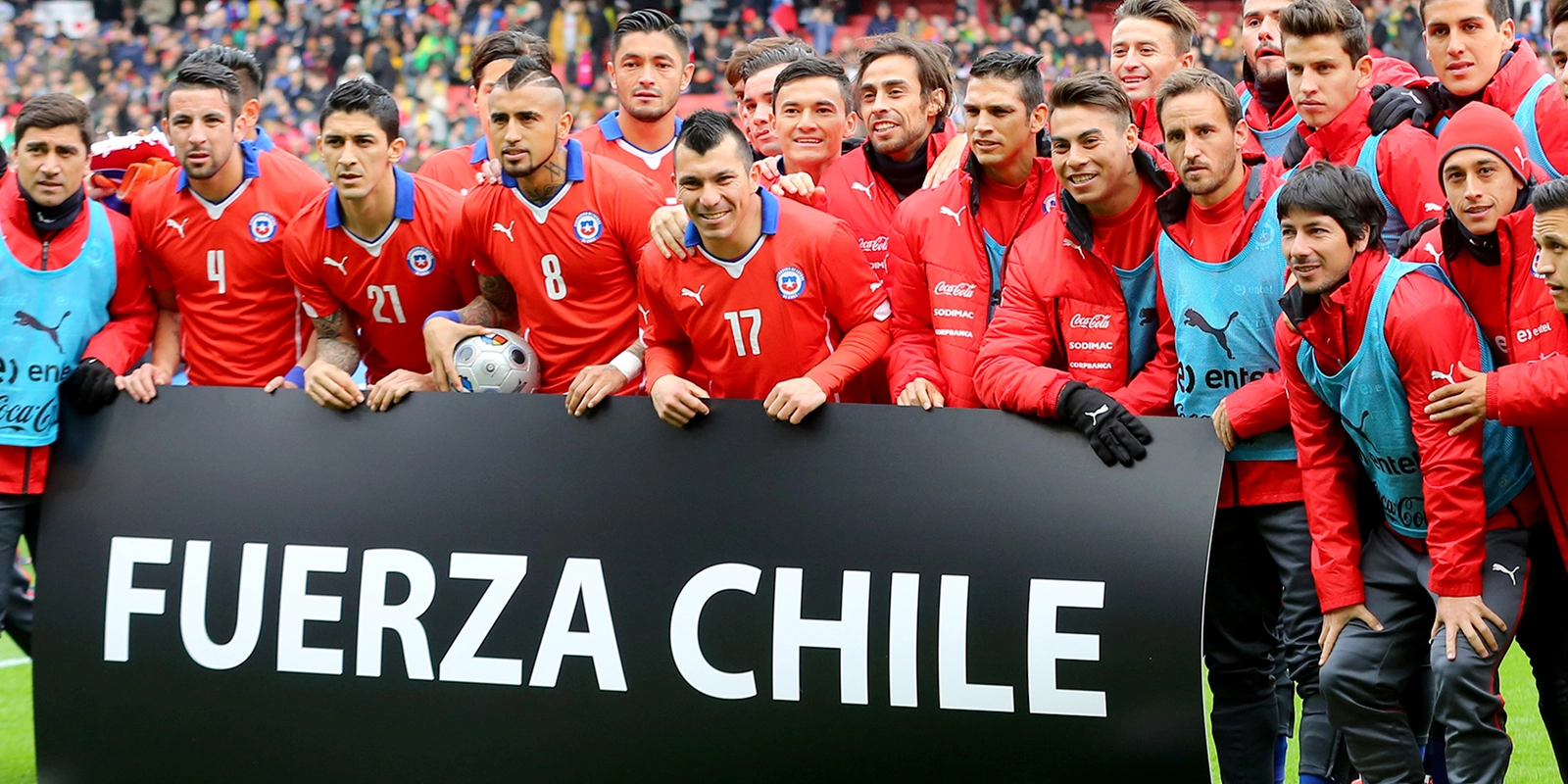
Chile is the reigning Copa America champion, winning its first international title at home last summer, and among the favorites to claim the Centenario crown -- if last year's success hasn't dulled the team’s desire. FIFA has Chile ranked No. 3 in the world, and La Roja has a most impressive roster, full of big-name stars at major European clubs who provided the foundation as Jorge Sampaoli, who resigned in January after four years in charge, built the side into a world power. The essential players have been around since the buildup toward the 2010 World Cup began -- even earlier for Barcelona goalkeeper Claudio Bravo, Chile's all-time caps leader, with 100 -- and are in their primes.
Arsenal's Alexis Sanchez and Hoffenheim's Eduardo Vargas are top-shelf attackers who prospered in Sampaoli's aggressive 3-4-3 formation, and Vargas has seven goals in his last 10 caps, going back to last summer's triumph. Bayern Munich's Arturo Vidal is midfield royalty, and Inter Milan's Gary Medel, Olympique Marseille's Mauricio Isla and U. de Chile's Gonzalo Jara have teamed up on the back line -- Medel sometimes in midfield -- for years. If they're as sharp as they were last year, La Roja could become the first country that isn't Brazil to repeat since Argentina did so 23 years ago.

Key Player
On a team loaded with first-class talent, Arturo Vidal has long stood tallest. The Bayern Munich midfielder, who turns 29 on May 22, is among the world's finest players, a do-everything sort who has been essential to Chile's success since debuting nearly a decade ago. He's a terrific passer of the ball, an accomplished tackler with limitless energy, a keen reader of the game, athletically superior: qualities that have served him well during excellent four-year tenures with both Bayer Leverkusen and Juventus.
Bayern Munich scooped him up for about $42 million last year to replace Bastian Schweinsteiger, after his phenomenal showing in Chile's Copa America success, and it's been somewhat hit and miss, with some uncharacteristically subdued performances mixed among several masterpieces in the latter half of the Bundesliga campaign. He's had some troubles off the field -- a DUI arrest during Copa America, press reports about showing up intoxicated at club functions, and whispers that he wasn't so highly prized at Juve, mostly about behavior and a propensity for minor injuries -- and he was roundly criticized in Germany after diving to win a penalty in a German Cup semifinal win last month over Werder Bremen. He's typically been at his best for Chile, and his form will have much to say about La Roja’s chances for success.

Manager Spotlight
Juan Antonio Pizzi has guided Chile through just two matches -- March's 2-1 home loss to Argentina and a 4-1 road victory over Venezuela in 2018 World Cup qualifiers -- so it's still a bit early to assess how things will change now that fellow Argentine Jorge Sampaoli's glorious tenure is complete. Pizzi, 47, is a former striker who started at Rosario Central, played a year at Toluca, then spent the bulk of his career in Spain's La Liga, with Tenerife, Valencia and Barcelona. He played for Spain's national team, scoring eight times in 22 internationals over five years leading to the 1998 World Cup, after which he retired and played out his club career with second and third stints with Rosario Central wrapped among stops at River Plate, Porto and Villarreal.
Pizzi began his managerial career at hometown club Colon Santa Fe in 2005, with brief stints at several South American clubs -- he won league titles with Chile's Universidad Catolica and Argentina's San Lorenzo -- before an 18-month spell at Valencia, who dumped him when they missed European qualification two years ago for the first time in eight seasons. He spent half a year at Leon in Mexico, then accepted the Chile job in late January. His task is continue the highest of bars set by Sampaoli.

Success looks like...
Expectations are massive, given last year's title, that FIFA ranking and the depth and experience Pizzi can call upon. Anything less than a final-four showing would be a big disappointment, and if they're not at MetLife Stadium for the final on June 26, there will be rumblings. The path won't be simple: They open Group D play June 6 in Santa Clara with Argentina, No. 2 on FIFA's list, in a rematch of last year's final, which Chile claimed on penalties following a scoreless draw.
Bolivia and Panama don't figure to offer much opposition in top-heavy D, but the round of 16 could bring a showdown with Uruguay, which routed La Roja, 3-0, in a World Cup qualifier in Montevideo six months ago, Sampaoli's final game, and sit atop CONMEBOL's 2018 standings. Chile pulled out a quarterfinal matchup with the Uruguayans a year ago, on Isla's late goal. There certainly exist questions about this team: Can Pizzi build on Sampaoli's success? Will they have the requisite hunger after parading the trophy not so long ago? Can they win the big games on foreign soil? That last one is thorny: Their greatest showing on the world's stage was third place in the brutal 1962 World Cup, at home.

Failure looks like...
There's so much hype for Chile, reasonable given all those names -- Vidal, Sanchez, Medel, Bravo, Vargas, and so on -- and the Copa America triumph by what's widely considered the greatest side the country has fielded, that it all might just blow up on them. A letdown after last year's success wouldn't be much of a surprise; repeating is never easy, and Chile has rarely pieced outstanding showings in successive tournaments. They've not beaten Argentina in years, and the knockout phase will be merciless, given the quality of the competition.
Throw out 2015, and La Roja's résumé isn't all that extraordinary: They were blasted by Brazil in the round of 16 at the 2010 World Cup after a tight loss to soon-to-be champ Spain for the Group H title, lost to Venezuela in the 2011 Copa America quarterfinals after winning their first-stage group, and their 2014 World Cup team -- heralded (a year too soon) as Chile's finest -- went out on penalties to ho-hum Brazil, which was, to be fair, on home ground. The only precedence for something special is successive runner-up showings in Copa America's predecessor, the South American Championship, in 1955 and 1956. The first of those was at home, too. Reaching the semifinals is a must for this group, although they might be forgiven if they play really well and fall in a quarterfinal classic. Fail to make it out of Group D, and Pizzi is likely looking for a new post.
