




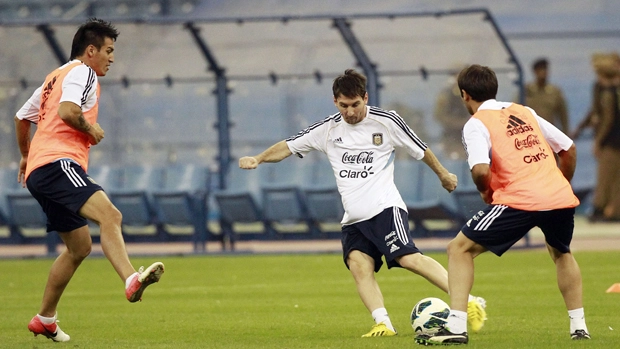
Playing football with a handful of mates at the local park may be doing more for your game than you think.
A study from the Institute of Sports Science at the University of Oldenburg, Germany, found that small-sided youth team games produce ‘match-like intensities’ and therefore increase game-specific aerobic fitness.
“Smaller-sided games require a higher number of offensive football actions,” explains Simon Bitcon, head of strength and conditioning at Manchester City.
“That means more touches, creating angles, movement off the ball to create space, along with defensive actions such as pressing the ball and cutting down space.”
The study showed that the smaller the teams, the greater the benefits, with 3 vs 3 producing the best results.
“This higher frequency creates a higher-intensity fitness demand, as well as creating a set-up where skill demands are high due to a reduction in decision time, space and one-to-one tight marking,” says Bitcon, who insists you don’t need to ask around for others to make up the numbers.
“Small-sided games demand that you really take care of the ball, pass quickly and move to create more space after a pass, while also keeping tight to your man when defending.”
