


Japan is bidding to stage the 2015 rugby World Cup, the 2016 Olympic Games and the soccer World Cup in 2018 or 2022.
Tokyo's 2016 bid leaders say the city is best placed to survive the credit crunch and host a debt-free Games having already secured a contingency fund of $4.4 billion.
Vancouver's cash bailout to help developers complete the athletes' village for next year's Winter Olympics was the latest reminder of the potential problems for would-be host cities.
Japan is not immune. With the country slipping deeper into recession and the world's second-largest economy shrinking, Japanese companies have already pulled the plug on much of their motorsport activities.
Honda's shock exit from Formula One last month amid a slump in global sales was followed by the departure of rival carmakers Suzuki and Subaru from the world rally championship.
Japanese motorcycle maker Kawasaki followed suit earlier this month by pulling out of MotoGP.
However, as a safety net and despite Tokyo's assurances that its finances are "rock solid", the Japanese government has offered to cover any potential losses incurred by the Olympics.
"Cities without this sort of financial guarantees will struggle to get the Olympics so it's fantastic news," Japanese Olympic Committee president Tsunekazu Takeda told reporters.
Tokyo hosted Asia's first Olympics in 1964 and faces competition from Chicago, Madrid and Rio de Janeiro in the race to host the 2016 Games.
OCTOBER VOTE
Barack Obama's landslide victory in the U.S. presidential election last November was seen as giving his home city of Chicago a boost.
However, Tokyo officials believe they have the financial muscle and technical know-how to win.
Many of the iconic venues constructed for the 1964 Olympics would be used again, along with a new, 100,000-capacity waterfront Olympic stadium if Tokyo wins the International Olympic Committee (IOC) vote in October.
Success in that vote would trigger a formal bid from Japanese soccer officials for the 2018 or 2022 World Cup tournaments. The hosts for both will be chosen in December next year.
Japan has the infrastructure to make a strong pitch for the World Cup having successfully co-hosted the 2002 finals with South Korea.
New FIFA rules require World Cup host countries to build a stadium with a minimum capacity of 80,000 for the opening game and final, something that has been the main sticking point for a potential bid.
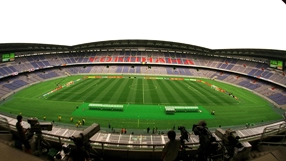
Yokohama, venue for the 2002 World Cup final, has Japan's biggest stadium with a capacity of around 70,000 but the new Olympic Stadium would fit the FIFA requirement nicely.
"We have to be realistic," said Japan Football Association vice president Junji Ogura. "But it would be difficult to bid for it again without the 2016 Olympics."
CUTTING EDGE
By the end of July this year, Japan will have learned whether it has won the right to host the rugby World Cup in 2015after missing out to New Zealand for 2011.
Japan rugby coach John Kirwan says Japan's economic strength and cutting-edge facilities should make the country the favourite in the eyes of the International Rugby Board (IRB).
"The whole world's in recession but Japan's bubble burst 15 years ago," the former New Zealand great told Reuters. "They will come out of recession before anyone else.
"By 2015 Japan will be in better shape than anyone else in the world. It's a no-brainer."
Japan faces opposing bids from Australia, England, Ireland, Italy, Scotland, South Africa and Wales.
Kirwan added: "People asking whether Japan has the infrastructure are ignorant. The last thing Japan needs to do is spend money on infrastructure.
"I was at Toyota Stadium the other day -- over 40,000 seats with a retractable roof. It was minus 3 Celsius and I had a warm seat. It was freezing but my bum was warm!"
