


FIFA president Gianni Infantino plans to privatise the World Cup, with UEFA furious about the plans.
According to an explosive report from The Times' Chief Sports Reporter, Martyn Ziegler, FIFA are to sell stakes in the World Cup to private backers, with talks having opened with investors close to the Trump administration.
The proposal has been met by widespread condemnation, with Prime Minister Andy Burnham even weighing in to state, “Football does not belong to investors.”
What have UEFA said about FIFA's new plans?
UEFA statement on The Times article: ⬇️ pic.twitter.com/ye1tjfWRCbJuly 28, 2026
In a statement made in a post on X (formerly Twitter), UEFA blasted FIFA's plans, claiming that football was not the world governing body's to sell.
“This crosses a line that football's governing institutions should never cross,” UEFA said. “UEFA takes it extremely seriously. So should every National Football Association. So should every stakeholder: leagues, clubs, players, supporters, governments and everyone who cares about the future of the game.
“The soul and governance of football are not assets to trade – especially with zero transparency as to who gains financially. None of us are the owners of football. It is not FIFA's to sell.”
What will UEFA do about this?

According to the BBC, UEFA's 55 member associations are set for an emergency meeting later this week to discuss these proposals.
Right now, there is no clear threat from UEFA to make their own move – though that could theoretically change.
UEFA's response in itself has been described in the same report as “remarkable”, with the Nyom-based body rarely commenting on FIFA in public – but further steps will be intriguing, given the power that UEFA wields within FIFA.
Of FIFA's 211 member associations, only 55 are members of UEFA, but with six of the recent World Cup's eight quarter-finalists coming from UEFA, European football carries huge weight.
UEFA president Aleksander Ceferin boycotted the World Cup final this month in protest at controversial moves from FIFA.
Why are UEFA concerned about this?
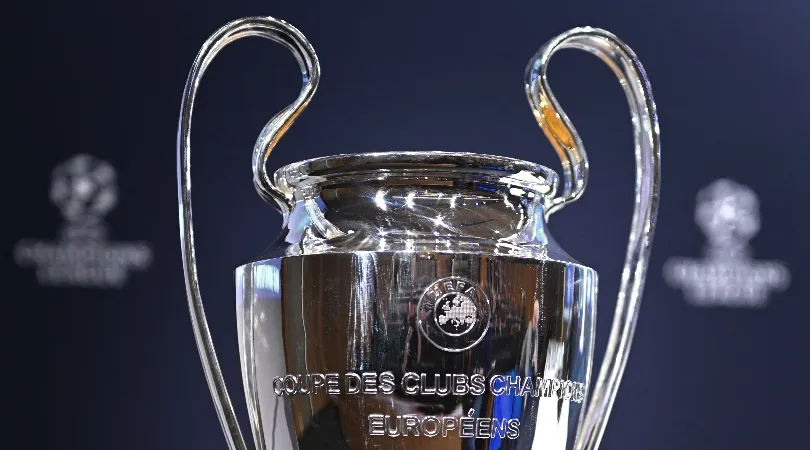
While it would be nice to presume that UEFA are worried about the sanctity of the sport, FIFA's suggestion to revamp their competitions would severely impact UEFA's own products – and that's likely to be a driving force in UEFA's opposition.
For example, biannual World Cup competitions would likely bring an end to the European Championship taking place on alternate even years, throwing the football calendar out of kilter, while scaling up the Club World Cup would further complicate things.
It's fair to guess that a supersized World Cup and Club World Cup would reduce the spectacle of a Euros or Champions League, respectively, taking even more of a physical toll on footballers already stretched to their limits.
Can UEFA withdraw from FIFA?

Yes, they can. As independent legal entities, UEFA have self-governance to cut ties with the world's governing body.
But that's not where the problem lies. FIFA is an association of individual national football federations: UEFA is not a part of FIFA: for example, the English Football Association, is, however, a member.
UEFA is the unifying body for Europe's 55 member associations, but individual football associations choose to align themselves with FIFA to participate in global tournaments.
So while UEFA would need agreement between all 55 members to sever ties to FIFA, England's FA could choose to legally resign or suspend its FIFA membership.
What can member associations do about these changes?

Essentially, any action will have to either come one of two ways: individually or collectively.
The problem for UEFA is that member associations – especially smaller ones – may well be in favour of these plans: FIFA claims that it wants to extend global funding, and with each member association getting around £15 million in one-off capital, the money will be far too good for many of the 211 members to turn down.
It's easy for England, France or Germany to turn down that kind of money (in theory, at least), but there are still developing nations in Europe that would welcome that kind of investment. This would make unilateral collective opposition to FIFA's privatisation deal incredibly unlikely.
Furthermore, a pact between top nations could be shaky. Say, for argument's sake, that France and Germany both agree to boycott the 2030 World Cup: that would obviously give England a once-in-a-lifetime boost to their chances of glory in the competition.
Some would argue that history doesn't include footnotes as to why teams triumphed or not: the first World Cup was invite-only, with several European nations declining to take part due to the costs of getting to South America during the Great Depression. Inaugural champions Uruguay still display that star proudly on their shirts, though. The context doesn't matter to them.
Could UEFA take matters into their own hands?

Yes, UEFA has legal power to penalise or even straight-up ban entire national associations that break ranks – but all 55 members would have to collectively pass a resolution first.
UEFA couldn't simply ban any club taking part in the expanded 2025 Club World Cup from the Champions League, because there was no clear violation of UEFA's executive directives.
In an emergency, however, under UEFA's governing statutes, UEFA can activate their Emergency Panel. This consists of the UEFA president (Aleksander Ceferin), the first vice-president, the treasurer, and two members hand-picked by the president, with the quintet, “authorised to take and execute final decisions on urgent matters that fall under the authority of the UEFA Executive Committee”.
UEFA's administration can then execute binding executive directives. Whether or not things reach such a stage remains to be seen…

