




If England are near the top of the list of underachieving footballing nations, then the Netherlands cannot be far behind.
There is a symmetry in their respective trials and tribulations. Each has only one trophy, despite a historic wealth in playing talent. For Charlton, Moore and the World Cup 1966, see van Basten, Gullit and Euro 1988.
Each has suffered multiple Final heartaches. If England fans think they’ve had pain in the last two European Championships, take a moment for supporters of the Oranje, who have lost in all three of the World Cup Finals they’ve reached in 1974, 1978 and 2010.
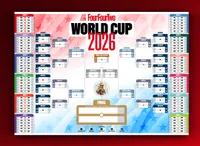
The outsiders

There have also been several narrow misses in the semi-finals for both, not to mention the respective embarrassments at failing to qualify for tournaments at all. The last two decades have seen England fail to reach Euro 2008 and the Netherlands somehow contrive to miss both Euro 2016 and the World Cup in 2018.
Yet when it gets to the imminent World Cup, the comparisons abruptly stop. Whilst England has been added to the shortlist of nations capable of lifting the trophy, the Netherlands have at best secured ‘Outside chance’ status.
When the Dutch squad was announced on May 27th by Ronald Koeman, the main reasons for such preemptive categorisation became clear. Yes, 12 years on since his breakthrough World Cup, the Dutch are still relying on an increasingly injury-prone Memphis Depay up front. And yes, you did read it correctly - Wout Weghorst, with just two league goals in 2026 for a desperately poor Ajax team, has still been selected. The loss of Xavi Simons - one of their real bright attacking sparks - is also a huge blow. The group draw has certainly not been kind to Koeman’s side either, pitting them against Japan, Sweden and Tunisia.
However, to play on the old mobile phone advertisement, could the immediate future in North America not just be bright, but Oranje?
There are certainly some reasons for Holland fans to be hopeful that this could be the year in which they finally break that World Cup duck:
A case for the defence
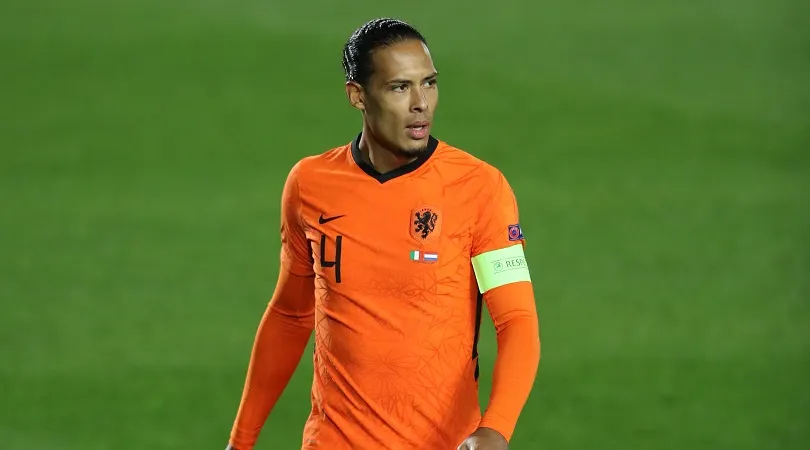
The football purists and highlights reel enthusiasts may not like it, but more often than not, defences win titles. And they certainly are important in tournaments. There is not much point having flashy furniture in your living room if there’s a huge leak in the ceiling.
If you scan the squads of those believed to be ahead of the Dutch in the pecking order, it’s difficult to argue that any of them have superior defensive options. One could go a step further and say that the Netherlands have the best defence in the tournament full-stop.
The likely starting back four will be Denzel Dumfries, Jurriën Timber, Virgil van Dijk and Micky van de Ven. The eagle-eyed fans will point out that three of these players are not in their natural club positions - with Timber normally at full back, van de Ven at centre back and Dumfries as an attacking wing-back. Yet all have excelled in these alternative roles under Koeman, with Timber having previously played regularly as a centre back at Ajax. Each has real physicality, aerial prowess and natural passing ability, with the pace of the respective North London players either side of van Dijk compensating for any concerns over the soon to be 35 year-old’s aging limbs.
The Dutch defensive quality is such that even with Matthijs de Ligt injured, Koeman has been happy to leave out the likes of Jeremie Frimpong, Stefan de Vrij, Lutsharel Geertruida and Sven Botman. Indeed, on paper, only seven defenders have been selected; although with Nathan Aké, Jan Paul van Hecke and Jorrel Hato in reserve, few can question the strength of the defensive options Koeman still has in his back pocket.
Rich in versatility

One of the reasons Koeman has taken one defender less is because of his confidence in Mats Weiffer, nominally a central midfielder, being able to cover at right back. And this points to another key attribute of the Dutch squad - almost all of them can play well in more than one position. This versatility is vital in tournament football.
The aforementioned Aké and Hato can play at both left back and centre back, whilst if Koeman wanted to play with extra defensive cover, Dumfries has shown the natural attacking ability at Inter Milan to play as a right winger with Timber at right back. In central midfield, Koeman has multiple players equally comfortable either sitting deep as a progressive holding midfielder or playing higher up the pitch; be it Frenkie de Jong, Teun Koopmeiners, Quinten Timber or Ryan Gravenberch. For the latter, it has perhaps been forgotten due to his reinvention at Liverpool that Gravenberch made his name at Ajax as a box-to-box midfielder more than capable of making attacking contributions.
And whilst the striker options are somewhat uninspiring - despite the performances this season of Bryan Brobbey - what the Dutch do have is a collection of wide attackers capable of playing on either flank or, in the case of Cody Gakpo and Donyell Malen, down the middle. There have been strong calls in the Netherlands for Malen to be the starting striker after netting 14 goals in 18 Serie A appearances for Roma. Although Gakpo has his detractors, he has been generally superb for his country. Meanwhile, individuals like Justin Kluivert and Guus Til may not get the pulses going but they are invaluable squad players who can play across the front line or even in attacking midfield.
If Koeman needs to respond to injuries - be it during or ahead of matches - he has a group of adaptable players at his disposal. And this extends to tactics. At the last World Cup, Louis van Gaal was hammered for his zeal for sticking with a defensive back-three wing-back system. On returning to the role of national coach, Koeman was clear that the system would revert to a 4-3-3 or 4-2-3-1 formation. However, his team still has the ability, and in some personnel the tournament experience, to change to that old shape if circumstances demand it. It was actually what Koeman used for much of the Netherlands’ Euro 2024 qualifying campaign. Not many sides at this tournament can switch so seamlessly between tactical formations.
Being able to naturally shift shape and player positions is not the golden ticket for World Cup glory - yet it is an extremely useful characteristic to have if you want to go far.
Experience and momentum
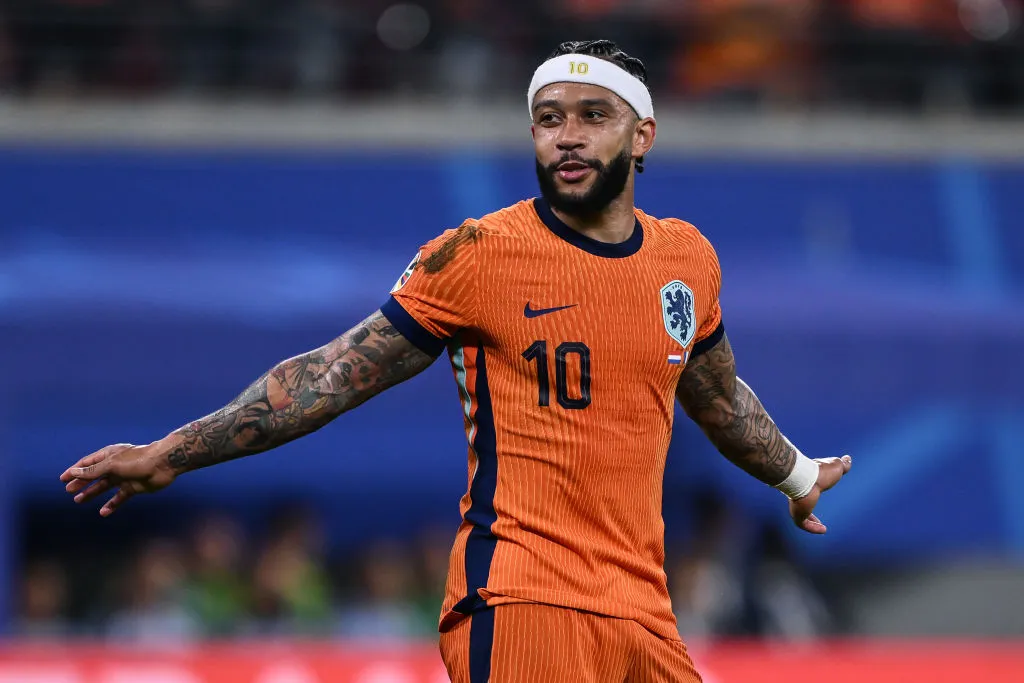
If the Premier League is widely deemed to be the best in the world, and if that league had more Dutch players (36) in 25/26 than ever before, then should we be ranking the international team’s chances a bit higher?
Over half (15) of Koeman’s 26-man squad played in the Premier League last season, a stat that includes Malen before his January move to Italy. To stretch it further, in the last 12 months, from a total of 41 international call-ups, 22 of those selected were Premier League players, including Mark Flekken, who left Brentford last summer. Performing at such a domestic level doesn’t guarantee international success, but it is nonetheless a contextual element to this Netherlands side that has been overlooked.
Yet when it comes to international tournament experience, the Dutch squad is still brimming with it, with exactly half of the group the same as the one that almost reached the Euro 2024 Final. For context, that is only one less than England. Going back further, 11 of the options Koeman has available also played in the 2022 World Cup. This continuity and understanding of the intricacies of coping on the game’s biggest stage are important.
This includes the experience of players like Depay. Although his integral role shows the persisting lack of depth at centre forward, it would be remiss to ignore his status as the Oranje’s record goalscorer and his 108 caps. Likewise, van Dijk now sits on 90 caps, whilst Dumfries (71) and De Jong (64) have vital experience. In total, 10 of the squad have 30+ caps for their country. To again give an English context, this is two more than the Three Lions.
And whilst momentum isn’t everything, it is certainly useful going into a tournament. It breeds confidence, unity and familiarity. During qualifying, the Netherlands won six and drew two of their eight games, scoring 27 goals and conceding only four. Indeed, since that Euro 2024 semi-final loss, in 18 matches the Oranje have lost only once across 90 minutes or extra-time.
A world-class midfield
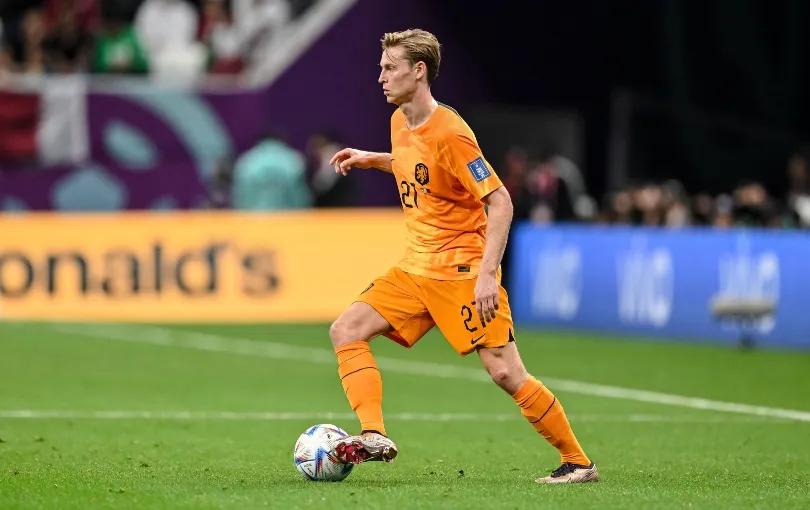
Finding the right balance in central midfield is an issue many international sides struggle with. Frequently, the imbalance comes from coaches feeling they are unable to leave certain big names out in such an essential area of the pitch, even if their skillsets don’t align.
Fortunately, Koeman does not have to worry about that with Gravenberch and Frenkie de Jong. Each encapsulates all the traits traditionally associated with Dutch central midfielders - quality on the ball, an almost floating athleticism across the pitch, intelligent reading of the game and supreme passing. Each are aggressive in the tackle and happy either being the deepest lying midfielder or the one breaking forward to support the attack. In theory, they have the ability to dovetail brilliantly. Neither was seen on the pitch at Euro 2024 - de Jong was injured and Gravenberch was merely a squad player who didn’t make the bench once. Their partnership in the middle of the park is a significant upgrade and surely one of the best at the World Cup.
Ahead of them, the recent lack of gametime for Tijjani Reijnders is a frustration, but the Manchester City man will still likely be the assigned ‘number 10’ and will be fresh. He too has many of the same attributes as Gravenberch and de Jong, and with 10 goals and assists in 30 international appearances, is proven at this level. It is a midfield with real balance - an engine room and a creative platform in equal measure that could make a real impact this summer.
At the last World Cup in North America in 1994, the Dutch reached the quarter-finals. For many, this will again be their glass ceiling, just as it was in 2022. Can they go all the way? The rational judgement is no.
Nevertheless, with quality in defence and midfield, and a squad with versatility and experience, they should not be underestimated. Reach the knock-out stages again when the margins are at their finest, and these attributes could well come even more to the fore. It could be a very different type of orange person taking all the glory on July 19th.

