




The American investor Warren Buffett once said that it takes 20 years to build a reputation and five minutes to ruin it.
He was talking about the corporate world, but with a tweak of the timeframes and a little artistic licence, the same could be applied to football.
Premier League history is littered with clubs who appeared to be on a sure footing after several seasons in the top flight, only for everything to unravel in a matter of months. Some manage to arrest the slide, others find themselves in the Championship before they know it.
Why Leicester City are a cautionary tale for clubs across the Premier League

For the best part of two decades, the financial power of the ‘Big Six’ - Arsenal, Chelsea, Liverpool, Manchester City, Manchester United and Tottenham Hotspur - has made it almost inconceivable to imagine any of those teams getting relegated.
Spurs gave it their best shot, though. A club who looked relegation-proof were 90 minutes from the drop last term, thanks to a dangerous mix of poor recruitment on the pitch and in the dugout, underperforming stars and a spate of injuries.

It is easy to forget that Tottenham actually gained three more points last season than in 2024/25, when they also finished 17th but were never at risk of falling into the bottom three.
You could argue that Spurs got away with it two years on the trot, but other teams have seen Premier League stability evaporate in a single season. Step forward, Leicester City.
The Foxes began the 2022/23 campaign as the club who had most consistently disrupted the Big Six over the previous seven seasons. Their incredible Premier League title in 2015/16 and the FA Cup triumph five years later grabbed the headlines, but they had also registered five successive top-nine finishes, narrowly missing out on a return to the Champions League in 2020 and 2021.
Nobody had them down as relegation candidates, however it quickly became clear that Leicester were presenting all the symptoms of a season of struggle. They signed just two players in summer 2022, with only Wout Faes arriving for a fee, and failed to sufficiently replace goalkeeper Kasper Schmeichel and centre-back Wesley Fofana.
Manager Brendan Rodgers did not hide his frustration at the lack of transfer activity during an alarming start to the campaign in which Leicester took a single point from their first seven games. They spent £32m on defenders Victor Kristiansen and Harry Souttar in January, but as injuries continued to bite, form only got worse. Rodgers was sacked in April, and interim manager Dean Smith was unable to save them.
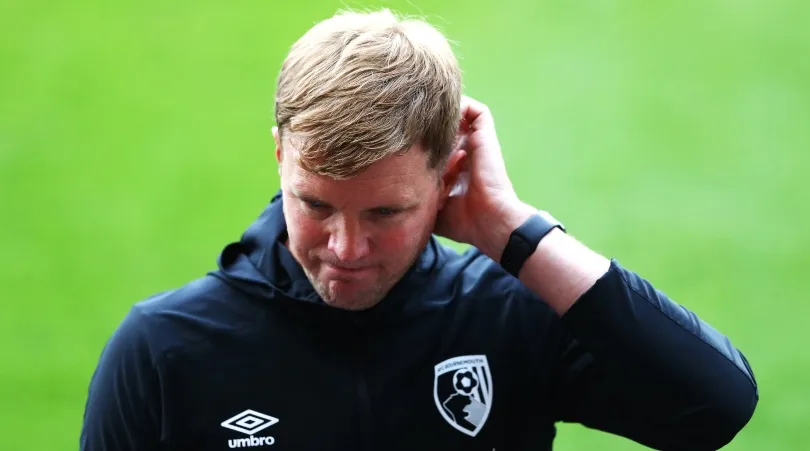
Leicester are the most high-profile example, but there are others. Bournemouth in 2019/20, plus Stoke City and West Bromwich Albion in 2017/18, all began their respective relegation campaigns with no apparent fear of the drop following multiple mid-table finishes.
Similar factors contributed to their demise: signings failed to deliver, influential players departed, lost form or suffered injuries, and managerial changes either didn’t work (Stoke and West Brom) or should have happened earlier (see Eddie Howe at Bournemouth and Alan Pardew at The Hawthorns).
There are plenty of long-serving Premier League clubs who have been relegated after circling the drain for a year or two - you could argue that the writing was on the wall for West Ham United and Wolves ahead of last season – but the above examples show that it takes only a few bad months for all you’ve built to come crumbling down.

It is why the majority of top-flight clubs should be wary of getting sucked into a relegation battle - even those who start the season looking up.
Bournemouth, Brentford and Brighton & Hove Albion are seen as the model clubs of English football, and all finished in the top half last term. However, the Leicester example shows how quickly a team regularly punching above their weight can find themselves on the canvas. Bournemouth and Brighton will be juggling the Premier League with European football, which could lead to a drop-off domestically.
Further down last season’s table, Fulham and Newcastle United have both lost a long-serving manager and multiple key players. If their replacements step up, both clubs will be absolutely fine, but if they don’t, they will be punished in a division as competitive as the Premier League.

Everton and Crystal Palace may also feel a relegation battle is beneath them, with the Toffees playing in a shiny new stadium and the Eagles winning trophies in each of the past two seasons. That could breed complacency, though, and it will be particularly interesting to see how new Palace manager Pierre Sage fares with a squad that is arguably weaker than last term.
Complacency shouldn’t be a problem at Leeds United or Nottingham Forest, who both battled relegation last season, nor at Sunderland, despite a shock seventh-place finish in their first campaign back in the top flight.
Of course, the fate of these established mid-table sides depends partly on the three promoted clubs: Coventry, Ipswich and Hull. Leicester, Bournemouth, Stoke and West Brom all suffered from other teams enjoying excellent first seasons back in the top flight, for example Fulham in 2022/23, Sheffield United in 2019/20 and Newcastle and Brighton in 2017/18.

On the flip side, the reason Spurs stayed up comfortably two seasons ago was because the three promoted clubs all failed to get anywhere near their tally of 38 points. Otherwise, Tottenham may have usurped Leicester as the ultimate example of an established Premier League team losing their top-flight status as a result of one horrific campaign.
Can Coventry City, Ipswich Town or Hull City exceed expectations and surge to safety in their first season back at this level?
If they do, the relegation trapdoor will be open and waiting to claim a surprise victim.
