




There were certain elements of this summer’s World Cup that many of us were glad to see the back of.
Hydration breaks, half-time shows and Argentina’s hatchet men certainly didn’t improve the spectacle, unless you like commercial breaks, the Superbowl and borderline GBH.
But cut through the nonsense and World Cup 2026 was a thrilling tournament on the pitch - and a welcome antidote to a Premier League season that many fans found a tough watch. So, what can England’s top flight learn from the Greatest Show on Earth? Here are five World Cup trends we would like to see in 2026/27 to make the Premier League fun again.
Time’s up for time-wasting

We all know how expensive it is to watch football these days, but last season’s Premier League offered arguably the worst value for money in the competition’s history.
In March, Opta revealed that the average ball-in-play time was just 55 minutes and 31 seconds per match, or 55.3 per cent, the second-lowest proportion since they started collecting such data in 2006. Meanwhile, the average delay before each restart reached a new high of 29.2 seconds, although the time spent waiting for VAR decisions played a part in this.
That changed at the World Cup, though, after FIFA - led by chief refereeing officer Pierluigi Collina - implemented several measures to combat time-wasting, including a five-second countdown if a player is taking too long over a goal kick or a throw-in, a maximum of 10 seconds for substituted players to leave the pitch, and forcing players to stay off the field for at least one minute (up from 30 seconds) after receiving treatment.
It contributed to an average ball-in-play time of 59 minutes and 35 seconds, giving those fans who had paid the eye-wateringly high ticket prices a little more bang for their buck.
Many of these measures are set to be implemented in the Premier League and EFL, so if they are enforced properly, it will create a better product.
Keeping keepers in check
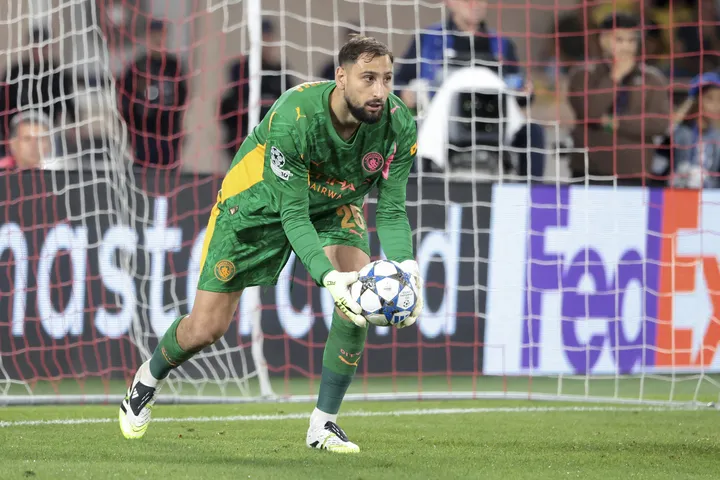
We’ve all been there. Your team is pushing for an equaliser and during a break in play the opposition goalkeeper drops to the floor, before signalling to the bench that he needs treatment.
While the physio gets to work, players from both teams head to the technical area to take on tactical instructions. When play resumes, with the goalkeeper miraculously back on his feet, the trailing team’s momentum has gone and a couple more minutes have been eaten up.
These tactical time-outs seemed to become more common last season, with Leeds United manager Daniel Farke even publicly accusing Manchester City goalkeeper Gianluigi Donnarumma of feigning injury to "bend the rules" last November.
Football’s lawmakers went some way to tackle this during the World Cup, telling referees to stop players going to the technical area when a goalkeeper is receiving treatment. Now, English football has gone even further.
As part of a trial introduced for the new season, an outfield player must leave the pitch for a minimum of one minute when a goalkeeper needs treatment, reducing the advantage to those who use the tactic. It’s a small rule, but it could make a big difference.
Stamp out the set-piece scrum

Arguably the defining trend of the 2025/26 Premier League season was the number of goals from set-pieces.
Champions Arsenal were the masters of this particular art, scoring 25 times from set-pieces (excluding penalties) and setting a new record for goals from corners in a single season (19).
It became a common sight to see almost all 22 players crammed into the penalty area when a corner was taken, with bodies falling like skittles as they jostled for position.
This was another area that FIFA looked to crack down on at the World Cup, with referees told to get tough on grappling, pushing and goalkeeper blocking. As a result, penalty areas were noticeably less crowded when corners were taken.
On an anecdotal level, it still appears that attacking teams are penalised more harshly than defenders (Erling Haaland may well have got away with pushing Elliot Anderson in Norway’s quarter-final defeat by England if he was in his own box) but the problem will only go away if referees continue to punish it.
If you don’t shoot…

One of the many enjoyable aspects of the World Cup was the return of the good old-fashioned screamer.
In total, 43 of the 308 goals at the tournament were scored from outside the box. That equates to 16 per cent, double the rate of Qatar 2022.
Chelsea midfielder Enzo Fernandez, Sunderland striker Wilson Isidor and Newcastle United forward Anthony Elanga were among those to score from long range during the tournament, so don’t be surprised if they try their luck a few times in the early weeks of the season.
The number of goals scored from outside the box in the Premier League has long been on the decline, down from 22.3 per cent in 2006/07 to just over 13 per cent last term, although that was a slight increase on the previous campaign. Let's hope this is the start of an upturn in screamers.
Good old 4-4-2

It would be wrong to conclude a FourFourTwo article without a nod to the formation that gave this publication its name.
4-4-2 was widely-used in the 1990s and early 2000s, but in the past two decades it has fallen out of fashion.
However, the formation is steadily becoming popular again, a trend that continued at the World Cup - and that’s good news.
Brazil and Morocco were among several teams to set up in a 4-4-2 out of possession, sitting in a mid-block rather than defending deep or pressing high. This resulted in bigger gaps in between the lines, leaving more space for attacking teams to exploit and games that were more open than many in last season's Premier League.
That was one reason for the increase in goals at this World Cup, with the average of 2.96 per game the highest figure since Mexico 1970 (2.97).
We all love a bit of nostalgia so that alone is enough to pine for 4-4-2, but if it makes games more exciting, we’re all for it.
