



From the cans of Carling in a devastated Wembley dressing-room to the final pint of Guinness in an Essex boozer, Tony Adams went on a 44-day bender after Euro 96 that still shapes his life today. It was the bender to end all of his benders. Adams had drunk for 12 years, and only in the final six months did he want to stop. He didn’t drink during the Euros but when Gareth Southgate missed his penalty, the final stretch of Adams’ descent into darkness began before the journey back into the light.
It's a remarkable story of Football Coming Home, and home truths coming into football. It’s all examined in Adams’ new book “1996” published on Tuesday (April 14). It charts the whole year and particularly chronicles events from England bowing out of Euro 96 on June 26 to 5pm August 16, when Adams just said no to the offer of another pint. He’d hit rock bottom. He joined Alcoholics Anonymous and has been clean since.
“I knew from the April when I went and saw James (West) my therapist that the game was up,” Adams recalls. “Drinking and everything was up. I'd actually crossed the line and I knew it wasn't safe for me. That's why I white-knuckled it through the tournament, and then when Gareth's missed, then I've got no option.

“It was defining for me. If he had scored, we are into the final (if Germany missed). I didn’t know I was going to play anyway. I had an injection, my ninth injection into my knee in the injury time of the semi-final. Gareth misses the penalty and the rest is history because I'd no defence.”
He had to face up to reality while first getting off his face. England drowned their sorrows in their hotel and the players then drifted off. “I've never been so lonely and so desperate and sad when I saw all the players leaving Burnham Beeches. The p**s was everywhere. I used to p**s myself. The drinks were everywhere. Terry had gone. They've all gone back to their families.”
Adams was alone, still hurtling downwards, still not at the bottom yet. How had he got there? “I didn't have an alcohol issue. I had a ‘me’ problem,” Adams, 59, explains. He was that dangerous combination of low self-esteem but with an ego massaged by club, fans and media. “I fixed me, and then I didn't need to drink and use again. I started to like myself a bit, and hallelujah, I didn't have to fix.”
Adams’ recovery has been aided by willpower, good people like West (who passed away in 2024), his second wife Poppy and the catharsis of a trilogy of books starting with “Addicted” in 1998. “There's still people now saying to me they got clean and sober from that book.”

Proceeds went to his charity and treatment clinic, Sporting Chance, the “mental health people for professional sportspeople”. Adams’ next book was “Sober” in 2017 and now, also with acclaimed sportswriter Ian Ridley, comes “1996” taking in a year of putting his first wife Jane into rehab, acknowledging and tackling his own addiction, Euro 96, and even Arsene Wenger’s arrival at Arsenal, itself emblematic of a sport sobering up. “It’s the year that changed my life,” Adams says of 1996. “It's a celebration of recovery.”
The book outlines the fear and self-loathing that led to Adams drinking and using cocaine. His family didn’t seem to show the love, reassurance and guidance a young Adams craved growing up in Romford. “My grandfather was a really serious drunk, angry, used to go down the pub and come home, and had a bunch of keys on the table. If you'd said a word, they’d end up in your face. So you go inside, don't you?”
Adams internalised his feelings. With such “rage around the place”, Adams avoided opening up. “As a small child, I had panic attacks at school. I didn't come home and say, ‘Hi, dad, I had a panic attack’.” His father was too busy working, down the docks during the day, then driving lorries at dawn. “He'd be like, ‘What are you talking about, son? Get a job’.”
His father was also in the grip of his own battle. “My dad saw his dad. ‘I can't drink, my dad was an alcoholic’. He swore he'd never do that. So he picked up cigarettes and died of lung cancer when he was 63. That was his out. He used to come home and rage because he couldn't drink or white-knuckling it like I was during the Euros. He would come home and punch the wall out. It's not unkind, because he's a great man, but what I saw, I thought, was a very sick man. He didn't understand. It wasn't a particularly great life for him.

“I never saw anything of him. My mum brought me up. She used to sit on the sofa, eat cakes, watch movies. She’d whisper ‘don't go to school’. I used to go over the park and play football. She was obese, died of bone cancer, a really good woman, but it wasn't particularly a great diet.
“I'm not blaming them. It's just the way they were brought up. I got all the wrong messaging that I was to toughen up and suppress, suppress, suppress. Football did that for me. It suppressed. And boosted it for me.”
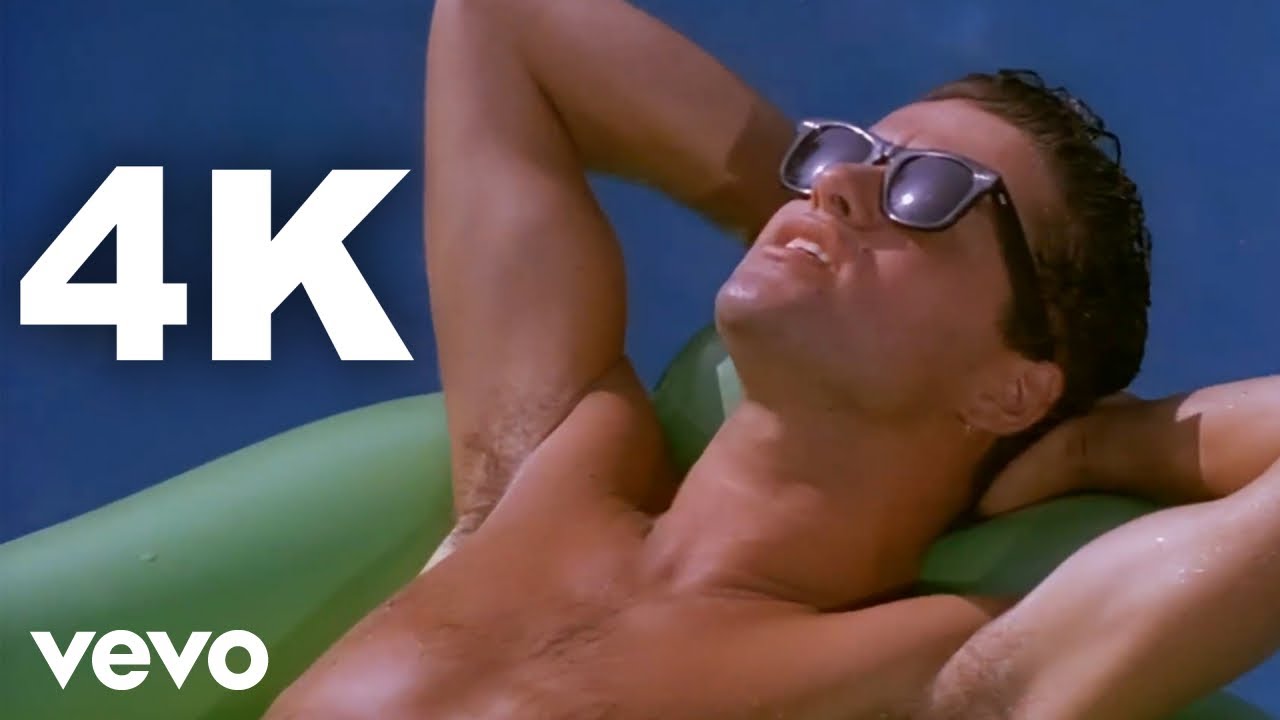
He made his Arsenal debut at 17, was captain at 21 and soon drinking heavily because of that insecurity. That was also the culture then. Nobody challenged an Arsenal and England international. He was on the lager shandies, lager tops, lager, lager, moving on to Guinness, bottles of wine, “never liking the taste of alcohol, but trying to drink, to get the effect. The money did help. I just went and got p*ssed again. It was holidays at the start, Ibiza, San Antonio, George Michael's video!”
Wham! filmed the video to their hit ‘Club Tropicana’ at Pikes Hotel on Ibiza when Adams was there. “Do you remember Club Tropicana? I wasn't in the video because I was p*ssed. I fell in the water. The drunk is funny, but it's so dangerous and I could have died on that occasion.”
He drank, he played, he drank. “This young kid is coming through and he’s kicking Kenny Dalglish. Roll on, don’t give a s**t what you do afterwards.” Smashed, Adams crashed his Ford Sierra into a wall near his house in Southend on May 6, 1990. “Four-and-a-half times over the legal limit, 85mph across an A road, clip a lamp-post, hit the front…” Adams shakes his head at the irresponsibility. And luck.
“It was the first time I put my seatbelt on for seven years. Is it odd? Is it God? Don’t know. But I put my seatbelt on that day and it saved my life. But I go to prison, Chelmsford. Not one person came up to me and said: ‘Do you think you’ve got a problem with alcohol?’ There’s no education, nothing in the prisons, come out, get back to football – against Reading, 7,000 people turn up.” I covered that reserves game at Highbury and the mood was of celebrating Adams not questioning him.
“That was the culture of the time. I was doing such a good job.”

He continued drinking, and there were even “games that I play pissed - Swindon and Everton”. He actually won man of the match against Sheffield United despite being inebriated. “I was lucky that we had a Tuesday Club,” he recalls of the infamous Arsenal drinking school. “They didn’t realise I had a Monday and Thursday one as well.”
His form was affected. Dennis Bergkamp, newly arrived at Arsenal, stared at Adams in the Bramall Lane dressing-room after the centre-back endured a terrible game in the FA Cup defeat by Sheffield United in January 1996. “I had a nightmare at Sheffield. It might have been my insecurities. It just felt like he was looking straight through me. ‘What the f*ck?’ ‘Who are you?’” Adams could see the shock in Bergkamp. “He was just: ‘What have I done coming here? What have I done with this lot of nutters?’ You’ve got Steve Bould kicking him around the pitch in training. And he’s like: ‘Have I made a mistake here?’ He’s obviously disappointed because we’re out of the Cup.”
People did begin to notice. “I avoided everyone that told me. The Lee Dixons of the world were going: ‘Tone, what the f**k are you doing?’ And I was like: ‘You’re a bit weird’. You ignore people or get rid of them, because you don’t want to have a look at yourself.”
He hid his drinking from Terry Venables. The England manager invited him for lunch at Scott’s in Mayfair to discuss the captaincy for Euro 96. “I was still using (alcohol) and went to the pub first to get Dutch courage. I went and sat down with him. I was looking at his drink and I thought it was water. I said, ‘I’ll have a water’. It was gin and tonic. Sh*t, I could have had a drink. He was completely oblivious to what was going on. I was a good mask.”

But the mask was slipping, and Adams knew he had to rip it off and face the world and his demons at some point. There were more and more stories about Adams. “The media were getting on our back. It was very, very vocal, you guys at that time, very powerful, the industry, the papers. I’ve still got trauma over that. The News of the World coming through at Burnham Beeches, and ‘Merse’ (Paul Merson) going: ‘Oh, you’re on the front pages again!’ With Coco the stripper.”
But he was off the drink. A couple of players asked him to join them for the night out in Hong Kong on England’s pre-tournament tour. Adams declined the offer but told them he’d be “first to the bar” when England won the Euros.
He was. After Southgate’s miss, Adams launched into cans of Carling in the dressing-room, then back to Burnham Beeches for an all-nighter. The squad gradually dispersed. “I had no option to just…I kept going. There were pub crawls for days. There's moments when I was in pubs and people were going, ‘Tony, you did brilliant. I'm really proud of you. Have a drink’.”
Jane had gone into rehab for her own addictions, come out and taken their kids, Oliver and Amber. Adams went to see Amber at school. “She came out and said, ‘we're talking about you, dad, at school. Dad, you've done really great’. I’m popular. It's lovely and it's supposed to be beautiful, but I was so traumatised, from my behaviour. I want to be a good father. I wanted to be a nice person and it robbed me of everything.

“I was paying for prostitutes. So, the same day the girl comes out at the school, I'm ending up with a prostitute. There's only one solution I had was drink, and then that stopped working as well.” He was sick and tired of being sick and tired. “I wanted the end. I’ve got the pint of Guinness with the brandy in it, and I wanted out. We talk about the jumping-off point in Alcoholics Anonymous, and I got to that moment where I just…I gave in.”
He went to AA, returned to Arsenal and told his team-mates, “I'm in recovery.” They were relieved. “They went, ‘well, we've been telling you for the last couple of years, you're the running joke, you're falling over’.” Adams was now sober and spiritual. “I used to run round when I got recovery, and say, ‘does a Jesus Christ have to appear in every generation for people with a lack of imagination?’ And the lads used to go, ‘what the f**k?!’
“I used to come from this character, this bully, this captain, with the mask on, going out and getting p*ssed, and then all of a sudden I'm meditating, and dropping them pearls of wisdom from religious books and they're like, ‘Jesus!’”

Anyway, back to Euro 96 and that semi-final. Venables often mentioned it to Adams. “He came up to me numerous times after and said: ‘I should have gone with a back-four, shouldn’t I?’” Venables went with a five: the centre-backs were Southgate, Adams and Stuart Pearce flanked by Darren Anderton and Steve McManaman. “He was influenced because Gary Neville was suspended. He just dropped Gareth in alongside which wasn’t what we practised. We practised the full-backs alongside with Gareth coming back into us. I found myself on numerous occasions playing one-v-one with Andreas Moller. It was too adventurous, it tipped the balance. It was a bit too Arsene and not enough George Graham.”
Venables’ men actually played well, but then came the shootout. How would Adams have reacted if Southgate had converted his kick? “Probably the same way,” he replies. “I was heading for the bar. No choice. I was trapped. I’ve had conversations with him about it absolutely. He keeps saying ‘sorry’.” Adams was delighted at Southgate overseeing shootout wins as England manager against Colombia at the 2018 World Cup and Switzerland at Euro 2024. There was also the joy of beating Germany at Euro 2020 at Wembley. “There was a bit of redemption in there and I was pleased for him on that.”

And pleased for himself. “I'm really proud that I've not p*ssed the bed for 30 years. It (the book) is a celebration. It's me going, ‘that was the year, from Arsene (arriving) to me putting my wife into rehab. It needed to be documented. It's such a pivotal year and it really shows the start of the journey.” Adams laughs at the suggestion that his recovery would have started sooner had Wenger come into his life earlier. “No! I would have killed him! Five years before, the lads would have killed him! ‘Windows’ turning up with his eyes like that?! It was right time, right place.”
Adams was ready to listen, and he absorbed Wenger’s advice. “He only wants the best for you. He's a caring human.” Adams responded by winning the Double twice under Wenger.
As Wenger said, before Adams had been playing at “only 70 percent of capacity”. Now he was 100 percent.
Adams lived alone at the time, rebuilding himself. “I started to work through the fear and the self-loathing, and that was a long journey, first six years of recovery, lived on my own, got to know myself warts and all. I got to a place after six years I was quite comfortable living on my own.

“And then all of a sudden Poppy Teacher went through the door, and who could have thought that I'd get such a wonderful, wonderful, emotionally and mentally beautiful woman. She’s got no addiction in her whatsoever, she’s purely balanced. If she's angry she tells you appropriately. If she’s sad, she cries. Perfect, perfect human being, sweet.” They have three children together.
Adams has watched Oliver, his son with Jane, address his own issues. “When you're watching someone that you love self-destruct over 10, 12 years, it's one of the most gut-wrenching, emotional things ever. He flew out to China in 2018 (when Adams was at Chongqing Dangdai), and I opened up a little bit, started to tell him about a few things that I did.

1996: Reflections on the year that changed my life by Tony Adams with Ian Ridley is published by Floodlit Dreams in paperback, £11.99 and in hardback exclusively at http://www.floodlitdreams.com, £14.99.
“He couldn't identify with any of it. He went, ‘I don't know what you're talking about’. Fast forward to April 23, St George's Day, a couple of years back, he came to me and said, ‘Dad, I'm f**ked. I'm done’.” Oliver now runs his own recovery programme.
Adams looks at football and still sees addiction. “They've changed their drug of choice. There's a load of gambling at the moment. It's an epidemic within football and society. Every 14 seconds on TV, there's an advert. ‘Have a free bet’. It’s like saying to me, ‘go on, have a drink, Tony. This one's on the house. Come on, have a line, there's a bit of coke. Go on, son’. It's becoming insidious.”
He sees problems throughout sport. “Tramadol with the rugby players,” he mentions. He sees the golfer Tiger Woods struggling. “I see an addict, to be completely honest with you. If he wants to come to my rehab, then there's a place in the room.”
Adams, lean and healthy, is a powerful advertisement for recovery. “I like myself today. I don’t care if you think I’m a knob. No, of course I care. I want you to like me. Everyone likes to be liked. But it doesn’t bother me. I’m going to go into the sunset and live a fantastic life.”

