


10. Marco van Basten

At once one of the most glorious footballers of the last half-century and one of the sport’s great what-if stories. In purely statistical terms, Van Basten’s career was fruitful by anyone’s standards.
He scored 301 goals and won two European Cups, 14 domestic trophies and three Ballon d’Ors. But these numbers are rendered doubly impressive due to how tragically truncated his time as a footballer was – he played his last game at the age of 28. It was for very good reason that two different European nations – Netherlands and Italy – went into mourning when he announced his retirement.
In the spirit of the Dutch footballing culture that he sprung from, Van Basten was staggeringly multi-talented, perhaps the most complete striker in history. He had a turn of pace, could hold up the ball and simply could strike a target that most centre-forwards couldn't even see: that he did so while dogged by such pain is both remarkable and terribly sad.
In the spirit of the Dutch footballing culture that he sprung from, Van Basten was staggeringly multi-talented.
Unlike many of his Dutch contemporaries, however, his position was very much unambiguous – he was an out-an-out centre-forward, a pure goalscorer. The ways by which he fulfilled his remit were many and varied.
The legend himself may have endured a tough career, with potential defining his legacy, but Van Basten still gave so much to the game. Without him, there is no Ronaldo, no Henry, no Suarez. He was unique.
Career highlight: There’s no debate. The greatest volley in his history, to confirm the Netherlands’ only major trophy, in the final of Euro 88.
9. Ferenc Puskas

The man with two playing careers, Ferenc Puskas's first chapter was defined by the Mighty Magyars, the Hungarian revolutionaries who shocked England and others, and who are still in debate with the Netherlands over who had the greatest side to never win the World Cup. For his next trick, however, he may well have invented the Galactico.
Puskas started playing for the national team aged 18, and found the net on his debut. Naturally: Puskas always scored. He averaged more than a goal per game throughout his illustrious career, including 87 goals in 85 caps for Hungary.
Four of them came at the 1954 World Cup, when Puskas proudly wore the captain's armband and opened the scoring in the final against West Germany after only six minutes. But sadly he wasn’t fully fit for that match, after sustaining a hairline fracture against the same opponents in the group stage. Hungary lost the final 3-2 in a notable upset.
After the revolution of 1956, he chose not to stay in Hungary and sought to continue his career abroad. Unfortunately for him, a subsequent UEFA ban meant it was a further two years before he was able to represent Real Madrid. He finally joined at the age of 31 in 1958, but still became one of their most prolific scorers in history with 242 goals in 262 appearances. His partnership with Alfredo Di Stefano was truly breathtaking, but he outlasted the great Argentine, staying until 1966.
Spain became his second country, and Puskas even represented them at the 1962 World Cup, albeit without success. His legacy is cherished in both Budapest and Madrid, and his unique style, scoring record and longevity confirm his place as one of the greatest players in history.
Career highlight: Taking England apart in Hungary’s 6-3 win at Wembley in 1953.
8. Gerd Muller

Quite simply, Gerd Muller was the greatest ever pure striker the world had ever seen.
His technical skills were not sublime, and he was neither fast nor physically imposing, but the phenomenal German had the remarkable talent of being in the right place at the right time to put balls into nets. Nobody was capable of doing that like him.
His scoring record is astonishing. Muller netted 365 times in 427 Bundesliga matches for Bayern Munich, winning the title four times. He scored 40 goals in a single season in 1971/72. He then hit 67 goals in 49 games in all competitions in 1972/73. He scored in two of the three European Cup finals the Bavarians won between 1974 and 1976.
Muller was neither fast nor physically imposing, but had the remarkable talent of being in the right place at the right time
Muller was the top scorer at the 1970 World Cup with 10 goals in six matches. At Euro 72, he scored twice in the semi-finals against Belgium and twice more in the final against the Soviet Union as West Germany triumphed. Then he got the precious winner in the 1974 World Cup Final.
In short, he was unstoppable. Muller rarely scored brilliant goals and even looked a bit clumsy at times, but that didn't matter. His ability to react faster than anyone else around him, and to leap higher despite being under 5ft 10in tall, was breathtaking. Fans and team-mates alike adored his unique skills, which led to his nickname Der Bomber. There will never be another one like him.
Career highlight: After netting twice in the final of Euro 72, Der Bomber helped West Germany win the 1974 World Cup too, bagging the winner in Munich.
7. Franz Beckenbauer

Like many great players, Beckenbauer was adept at playing in several positions. Originally a centre-forward, he actually made his Bayern debut in the Regionalliga Sud as a left winger, and in his first full season, Bayern won promotion to the recently formed Bundesliga. As Bayern’s youth team products blossomed, Bayern gradually became the dominant force in West German football.
There are two versions of the story about how Beckenbauer was given the 'Kaiser' moniker. Beckenbauer claims it was because, in 1968, he posed alongside a bust of former Austrian Emperor Franz Joseph, and the media referred to him as Fussball Kaiser afterwards. Alternatively, it was because in the 1969 German Cup Final he fouled Schalke’s Reinhard Libuda, often known as Konig von Westfalen (King of Westphalia), and the press believed that Beckenbauer had now trumped him.
Either way, the exalted moniker was entirely befitting: Bayern won a hat-trick of Bundesliga titles between 1972 and 1974, and did likewise in the European Cup between 1974 and 1976. On the international stage, Beckenbauer captained West Germany to triumph in the 1972 European Championship and 1974 World Cup.
Like Bayern, Beckenbauer wasn’t universally loved, and often expressed shock at the aggression displayed towards his team at Bundesliga away games. Aged 18, he was banned from the West German youth team for refusing to marry his pregnant girlfriend, and – controversially - he was no longer selected for international matches after joining the New York Cosmos in 1977 for a hugely successful four-year spell.
Der Kaiser returned to the Bundesliga in the early 1980s, when he led Hamburg to the league title. Naturally. He was a born winner.
Career highlight: At Hampden Park in 1976, Beckenbauer captained Bayern on the night they completed a hat-trick of European Cup victories, defeating Saint-Etienne. “I still have a huge feeling of pride about that one,” he later recalled.
6. Ronaldo

The bald-headed, gap-toothed kid’s place in the pantheon of modern greats is now secure. He won his first FIFA World Player of the Year award at the tender age of 20 in 1996, went on to become the second footballer to be honoured three times, claimed the Ballon d'Or twice and became the World Cup’s greatest scorer in 2006 with his 15th strike (since surpassed by Miroslav Klose in 2014).
Has there ever been a more impressive debut season for a club anywhere in the world than R9 managed in Barcelona? The Brazilian scored 47 goals in 51 matches as the Catalans won the Copa del Rey and UEFA Cup Winners’ Cup, and narrowly missed out on La Liga – but Barça couldn't hang on to him for long, as the forward signed for Inter in 1997 and was the star attraction at the 1998 World Cup, where he won the Golden Ball and finished with four goals.
Yet the last chapter infamously didn't go as planned: he suffered a fit before the final against France and failed to perform after he was eventually named in the starting line-up, as Brazil lost 3-0 to the hosts. He later signed for Real Madrid and showed tantalising glimpses of his best form as one of the galacticos. Yet Ronaldo was never quite the same again and retired in 2011 – still scoring goals, but with his game necessarily reinvented thanks to his loose lifestyle and dodgy knees.
Career highlight: Back from injury woes, his brace in the final won the 2002 World Cup for Brazil, and clinched the Golden Boot.
5. Cristiano Ronaldo
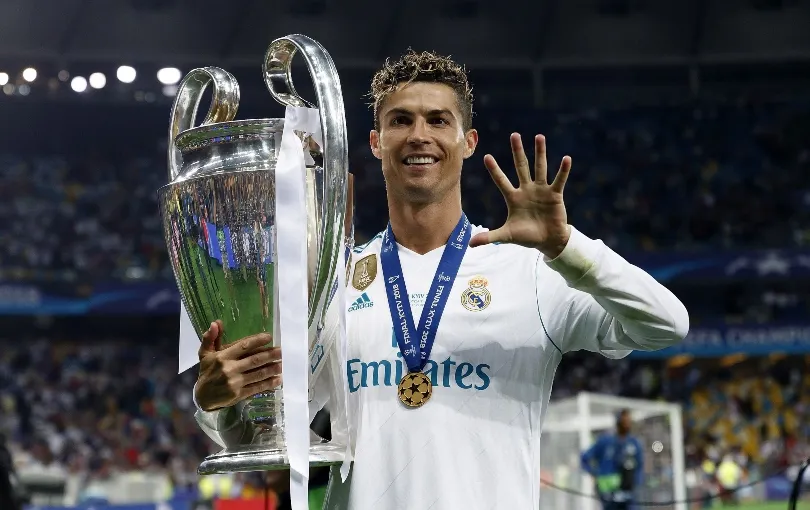
When Ronaldo became the first player ever to score in five World Cups, two days after Argentina opened their 2022 campaign with a shock defeat to Saudi Arabia, he hoped it would be the start of his bid to stand above Lionel Messi forever. Instead, things unravelled irreparably in just a few weeks.
While Messi went on to win the World Cup, Ronaldo found himself dropped by Portugal, eliminated by Morocco, then seemingly unwanted by Europe’s top clubs after not so much burning his bridges at Manchester United, as blowing them to pieces with a barrage of Piers Morgan-loaded HIMARS missiles.
“It’s not the end of my career to come to South Africa,” CR7 insisted upon his arrival at, er, Saudi Arabian side Al Nassr, with a classic Robinho gaffe that probably gave away he wasn’t entirely thrilled to be at his new club, with average gates of just 8,000 last season. “In Europe, my work is done,” he continued, flexing as a self-defence mechanism. It was hard to escape the suspicion that Europe had decided it was done with him, rather than the other way around.
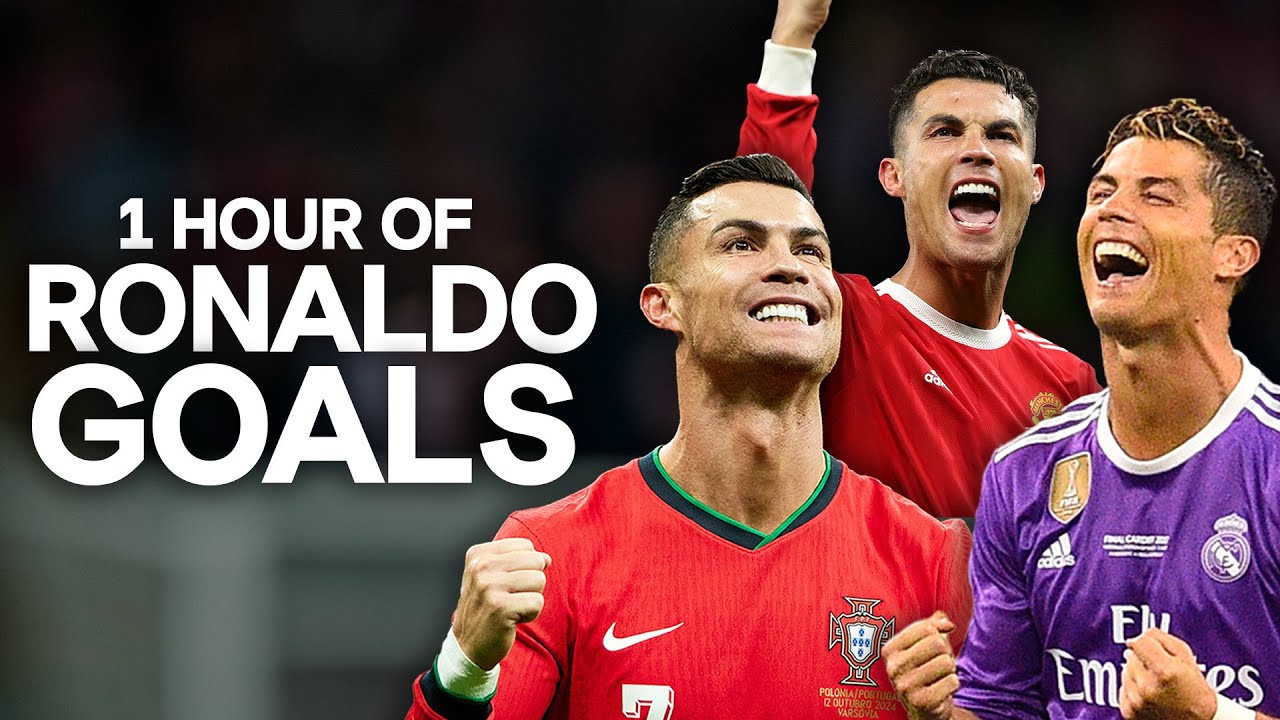
But what a time it was at the top. And while Ronaldo's career from 2020 onwards may reshape his legacy in years to come – for good or bad, depending on the 2026 World Cup – no one can deny the impact he's had on football.
Ronaldo was capable of magic without being a natural genius. The cliche was that this guy worked harder than anyone else to reach the level he did – and he's become an inspiration to millions through his mentality and his work ethic. He has taken goalscoring to unseen heights: he is the greatest footballer of all time to be considered a mere mortal.
Cristiano Ronaldo is the greatest footballer of all time to be considered a mere mortal.
Naturally, that will never be enough for a man with a hunger like we've never seen before. But it should be: CR7 has given so much joy to so many, he may well have reached the peak of any Premier League footballer ever, and he will forever be regarded as an all-time great… regardless of the last few years.
Career highlight: In 2008, a towering Ronaldo header helped Manchester United to the Champions League title, leading him to his lifelong goal of being voted the best player in the world. He had reached the pinnacle at 23 - and yet it was just the start.
4. Johan Cruyff

Two months after making his first-team debut, Cruyff met former PE teacher Rinus Michels. Together, the pair invented Total Football. Wingers and overlapping full-backs kept the pitch wide, defenders were encouraged to bring the ball out from the back (if a midfielder dropped to cover the space) and the centre-forward – usually Cruyff – could roam free as Michels’ on-field conductor.
It worked. Cruyff won 20 major honours – including three successive European Cups from 1971 to 1973 – before a player revolt had him banished to Barcelona. Not content with revolutionising one club, El Salvador (the saviour) did so again, winning the Catalans’ first Liga title for 14 years. Nobody could match his speed, vision or eye for goal.
Part of arguably the best team never to win the World Cup in 1974 – the Netherlands lost 2-1 to West Germany in the final, having gone 1-0 up without the hosts touching the ball – Cruyff may not have reached his peak with his national team, but that only adds to his allure.
He retired in 1978, aged 31, and refused to go that summer’s World Cup. The following year, however, he was back, having lost the vast majority of his fortune in a pig farm venture in Catalonia. Spells in America for the Los Angeles Aztecs and Washington Diplomats followed, as did a trophy-laden return to Ajax and even a season at their bitter rivals Feyenoord.
“Cruyff always seemed to be in control. He made things happen,” said Rudi van Dantzig, a long-time collaborator of the great ballet dancer Rudolf Nureyev, himself a close friend of Cruyff’s. “There was something very dramatic about him, like a Greek drama – life or death, almost, even when they played ordinary Dutch League games.”
Career highlight: Getting a turn named after him, after confusing the hell out of Jan Olsson against Sweden at the 1974 World Cup.
3. Pele

“In some countries they wanted to touch him, in some they wanted to kiss him. In others they even kissed the ground he walked on,” said his former team-mate Clodoaldo.
There are some who claim that Edson Arantes do Nascimento was overrated. Frankly, he's become underrated over time.
At the age of 17, in 1958, Pele became the youngest player to feature in a World Cup final. He scored six times in Sweden, including a semi-final hat-trick and two more in the final. It was to be the first of three World Cup trophies he brought back home as an answer to those tears he saw running down his dad’s face. His contribution in 1962 was minimised by injury, while the persistent fouling of him in 1966 made him swear that it would be his last World Cup. He didn’t stick to it. He was convinced into returning for a fourth tournament in 1970 and became part of one of the best attacks ever compiled – alongside Tostao, Jairzinho, Rivellino, Clodoaldo and Gerson. While Jairzinho top-scored, Pele added four more to his World Cup tally.
In some countries they wanted to touch Pele, in some they wanted to kiss him. In others they even kissed the ground he walked on
Clodoaldo
Overall, he played 14 games at World Cups, scoring 12 goals (no penalties) and recording eight assists, culminating in Carlos Alberto's thunderclap in the 1970 final. He played 795 full games' worth of minutes in official matches and racked up 756 goals, along with 367 assists – most of which came from a no.10 position. 144 goals came in 130 games against European sides. He played in one Copa America, and was the player of the tournament with eight goals in six games.
Pele was a beacon. He was an unprecedented icon to black Brazilians just decades after the nation had abolished slavery, and in turn became an icon to Africa: in Nigeria, a two-day truce was declared in the war with Biafra as a way for both sides to watch him play.
Overrated? He was the first global superstar in football. He was the no.10. He is deified in Brazil – and rightly so.
Career highlight: On November 19, 1969, Pele scored his 1,000th goal from a penalty in a match against Vasco da Gama at the Maracana stadium.
2. Diego Maradona

How do you separate the three greatest footballers of all time? Any of them would have been worthy winners, but we can only pick one.
Longevity, goals and trophies are where Lionel Messi and Pele arguably have the slight edge but, boy, Maradona was exciting. The Argentine was the rebel who produced possibly the most iconic individual goal ever scored, on the way to maybe the greatest World Cup triumph of all in 1986 – seemingly just to prove he could, after punching the ball into the back of the net. He is still a god in both his homeland and the Italian city of Naples, even in death
Just 5ft 5in tall, El Pibe de Oro’s dribbling skills enthralled a generation, from the moment he made his Argentinos Juniors debut as a 15-year-old, and nutmegged an opponent with his first touch. He scored 116 goals in 166 games then joined Boca, winning the league title after a solo goal against rivals River Plate.
Maradona produced possibly the most iconic individual goal ever scored… seemingly just to prove he could
Barcelona paid £5m a year later. Within months, he’d taken Real Madrid apart at the Bernabeu, before injury and illness struck him down. He moved to Napoli for £6.9m in 1984, becoming the first player post-World War II transferred for a world-record fee on two separate occasions. There came his finest days: inspiring his new club to the only two league titles of their history, after World Cup glory in Mexico. He captained Argentina to another final in 1990.
Yes, he never won the European Cup, or progressed beyond even the last 16, but Maradona was about so much more than mere trophies.
Career highlight: Dominating the 1986 World Cup with five goals and five assists, scoring the Goal of the Century against England. The one he scored with his foot…
1. Lionel Messi
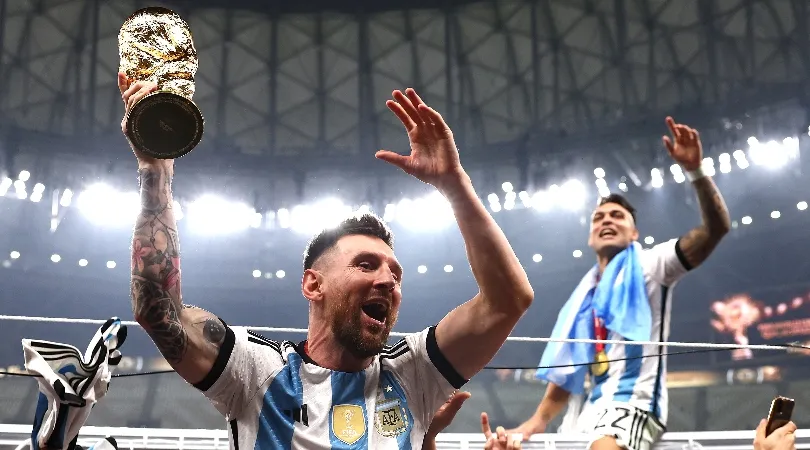
The history books will laud Messi, and yet their limitations will do him a disservice. In 20 years, young football fans will read about a messianic figure whose brilliance stunned the world, shattered a litany of records and started an era of dominance… but not until they watch the videos will they get an idea of what they have missed.
The quantity of his goals pales in comparison with their beauty. The goal of the month may not even make his top 20, be it a solo run, a bending free-kick, a cheeky lob, a golf putt finish or a thunderous missile.
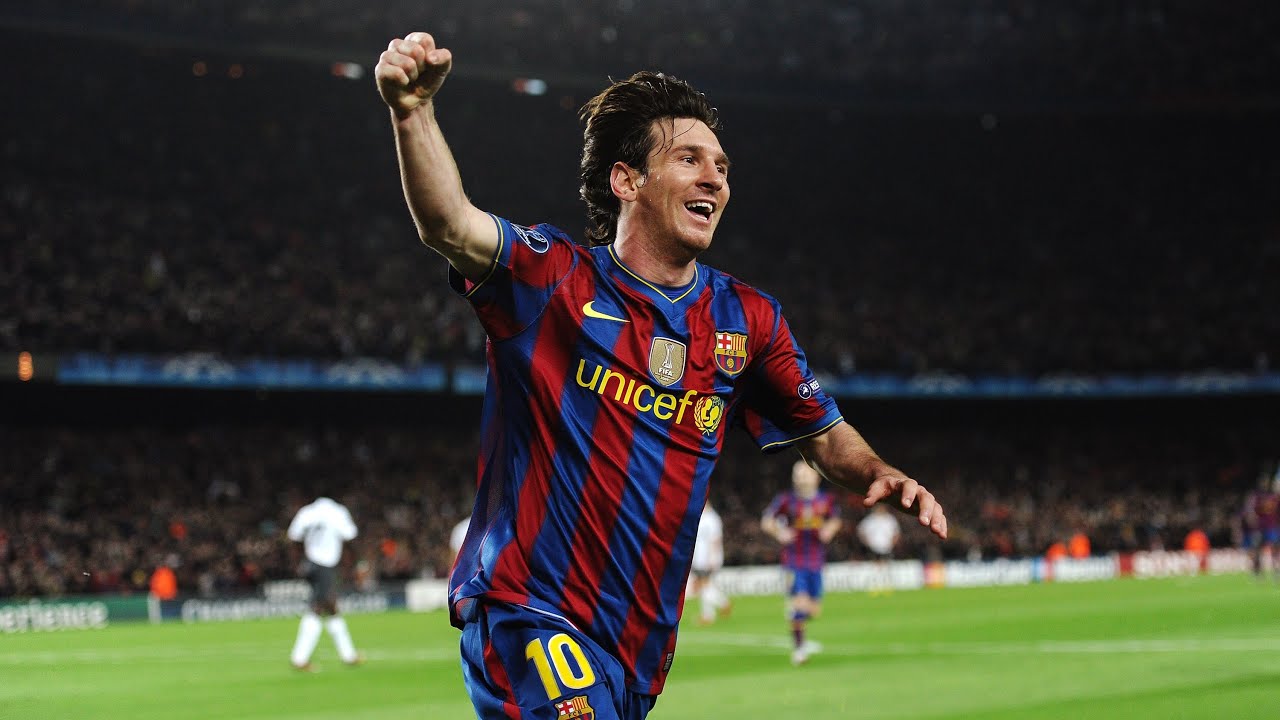
By now most know his story: how expensive medicine for a growth hormone deficiency led him from his home town Rosario to Barcelona, where his 2004 debut started an era of brilliance. He has been voted into the world's top three players for 10 years, and in the top two for nine.
It’s one thing to reach the top, quite another to stay there. There are fans well into their 20s who have never known a world in which Messi is not spellbinding us on a weekly basis.
Only by evolution has Messi managed to maintain his level. The livewire dribbler has become a mature playmaker who now dictates play while still proving decisive in the final third. Never has Messi, now in his 30s, better balanced playmaking, dribbling and goalscoring.
The quantity of Messi's goals pale in comparison with their beauty.
As Javier Mascherano has said, he is three players in one. You could argue that one of the greatest goalscorers of all time is also the best passer, and you would not lack evidence to support your claim.
In the meantime, pundits, fans and writers will try to express his greatness with words and metaphors. They will all fail, as will the article you are reading now. The best we can do is listen to Pep Guardiola, who said: “Don’t write about him, don’t try to describe him. Just watch him.”
Career highlight: Completing the set in Qatar and winning the World Cup with Argentina.

