




Inter Miami co-owner Jorge Mas made clear last December that the priority for Lionel Messi’s MLS team in 2026 was to win the Concacaf Champions Cup and secure the accompanying Club World Cup berth.
Those lofty aspirations lasted just one round, with a stunning early elimination to familiar foe Nashville SC leaving the South Florida side in crisis at a pivotal moment.
Messi and Inter Miami are out of the Concacaf equivalent of the UEFA Champions League after a crushing Round of 16 exit. A 0-0 stalemate in Nashville was followed by a rainy 1-1 draw in Fort Lauderdale this past Wednesday, with the Herons ousted via away goals.
Inter Miami's attack off to an anemic start
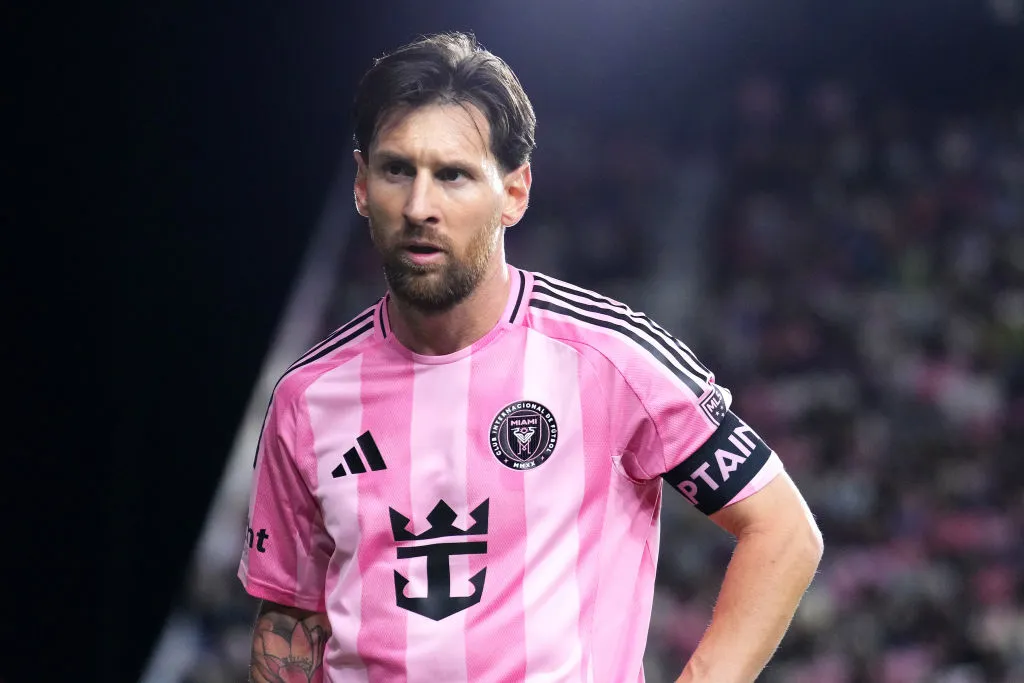
The result marked an early and significant setback for a high-profile team that entered the season with heightened (and self-imposed) expectations.
Inter Miami wanted to become the fourth Major League Soccer outfit to ever win the competition that has been largely dominated by Mexican clubs, but now must regroup and refocus ahead of a new stadium opening.
Mascherano under renewed scrutiny

How Javier Mascherano’s men bounce back and maintain motivation after failing to deliver on their top priority is now a central question, particularly in a World Cup year for Messi, Rodrigo De Paul and others. Early performances across the opening seven games of 2026 have also exposed notable collective shortcomings, including struggles to unlock a talented attack following the offseason losses of key Messi connectors Jordi Alba and Sergio Busquets.
Here are the most pressing issues now facing Inter Miami:
Mascherano immediately pointed the finger at himself for the elimination during Wednesday’s postgame press conference. The stance reflected the Argentine head coach’s trademark reluctance to single out his players, but it also rang true.
The 41-year-old Mascherano has yet to fully convince that he is the right man to lead the ambitious project since being given the job prior to last season. He did guide Inter Miami to its first MLS Cup title in 2025, but that run was aided by a degree of fortune.
A formal complaint from Nashville SC during a first-round playoff series led to MLS suspending aging starting striker Luis Suarez, which opened the door for Mascherano to field a younger, more energetic and dynamic lineup that went on a commanding run to the historic championship.

That context — combined with the initial questions surrounding Mascherano's appointment given his ties to Messi and lack of prior experience managing at the professional level — makes this early exit more significant. It has renewed criticism about his tactical approach and Inter Miami’s direction under his leadership.
Mascherano will surely have time to right the ship, but evidence of progress both in style of play and results will be required sooner rather than later.
Messi remains the fulcrum of Inter Miami’s attack, but the conditions around him have changed.
More asked of Messi
Alba and Busquets retiring after last year’s MLS Cup victory has left Messi without two of his key combination partners. The 38-year-old Argentine is no longer regularly receiving the ball in advanced areas, forcing him to drop deeper to get involved and in turn reducing his influence in the more dangerous parts of the field.
This shift has placed a greater burden on Messi, who is still expected to deliver in the moments that matter most. He has scored four times so far this season, but finished the two Champions Cup games against Nashville SC with just one goal and no assists.
That is muted production by Messi’s high standards, particularly in a series in which the South Florida side needed its star player to be the difference-maker he so often is. It is also not an isolated occurrence, as he has recorded just two goals and two assists in the nine games that have contributed to five Inter Miami eliminations with him on the field.
There is no denying that as Messi goes, so too does this team. The responsibility to produce may not rest solely on his shoulders, but he remains the lead man and the expectation for him to deliver in decisive moments does not vanish just because two of his more talented teammates did.
Supporting cast must deliver

Inter Miami has produced just seven goals in six matches, a small sample size that nonetheless highlights how anemic the team has been in the final third.
Tadeo Allende, who secured a permanent transfer from Celta de Vigo this winter, has gone from being a goal-scoring machine during last year’s run to the MLS Cup title to an inconsistent and scoreless presence. New striker German Berterame has also failed to open his account since arriving as a Designated Player from Monterrey in Mexico, with a lack of on-field understanding with Messi evident on the front line.
Other members of Miami's supporting cast have also had their struggles, including the energetic De Paul. The team's other DP, along with talented Venezuelan attacker Telasco Segovia, has been tasked with helping fill Busquets' role of generating play from central areas.
The adjustment has not been seamless, with De Paul demonstrating a wide range of passes while also making costly mistakes that have led to goals against. Even when he has avoided errors, Inter Miami has often executed slower and more predictable build-up sequences that have been easier to defend against than in years past.
More players have to step up if things are to improve quickly, or the load on Messi's shoulders will only continue to grow.
What comes next?

The immediate goal for Inter Miami after Wednesday’s disappointment is fairly straightforward, even if it will not be easy.
The team must avoid any emotional hangover and steady itself as the focus turns almost exclusively to the MLS season, which includes the remainder of the league title defense and a highly-anticipated April opening of a new venue named Nu Stadium.
The injection of excitement over having a home in Miami proper at last will surely be welcomed by the protagonists, but that buzz will quickly subside if their performances and results remain as inconsistent as they have been to start 2026.
Things have not gone to plan at this early point in the year, but the opportunity to turn it around begins now for Inter Miami. Failure to do that, and this could become a season defined more by unmet expectations than the success that was dreamed of.

