


25. Manchester United, 1995-2001
The summer of 1995 was a pivotal time in the reign of Alex Ferguson at Old Trafford. His team had just relinquished their Premier League title to Blackburn, lost the FA Cup final to Everton and sold Mark Hughes, Paul Ince and Andrei Kanchelskis – three key players in Ferguson’s first two championship triumphs.
Then the Manchester United manager did a strange thing: he bought nobody to replace them – instead choosing to put his faith in several members of the club’s FA Youth Cup-winning side, who had all made a handful of appearances the previous season. And so began the most dominant, consistent and thrilling period of the Ferguson era: as well as the famous treble in 1999, United won another FA Cup and four more league titles.
24. France, 1996-2000

France had a fallow patch after the break-up of their glorious mid-’80s team, missing the tournaments in 1988, 1990 and 1994 while exiting Euro 92 winless. But a new breed was emerging, with an international flavour. Eric Cantona’s year-long suspension in 1995 handed the playmaker baton to son of Algerian immigrants Zinedine Zidane, alongside schemer Youri Djorkaeff (son of an Armenian and a Kalmyk Pole).
This was a new France: a nation that was divided politically. Aime Jacquet's black-blanc-beur team (black, white and Arab) was a reflection of society and a reimagining of the national flag itself. President Jacques Chirac positioned himself as a father to this multicultural family, while Front National leader, Jean-Marie Le Pen, argued that this team wasn't French enough.
Jacquet's side triumphed on home soil with a brand of football that allowed for genius in attack ahead of a strong defence including Laurent Blanc, Lilian Thuram, Marcel Desailly and Bixente Lizarazu. It was a young, physical and thoroughly modern side that came of age as one, beating favourites Brazil 3-0 in Saint-Denis, before performing an encore two years later at Euro 2000, Zidane and Thierry Henry playing some of the most mesmerising football they ever would for their nation.
Zizou's face was projected onto the Arc de Triomphe with the words ‘Zidane President,’ perhaps changing forever what it truly meant to be French. Chiraq's popularity would skyrocket, French GDP steadily soaring in 1998, too – in part, thanks to football. The same banlieues that produced the 1998 stars erupted in civil unrest within a decade, but for the glimpse that Les Bleus were the best team on Earth, they were a team good enough to unite the whole of France.
23. West Germany 1970-76
Among the new faces in the West German squad at the 1970 World Cup was Gerd Muller, who’d already scored 207 goals in 235 Bayern Munich appearances. He promptly bagged 10 in five games, including two in the semi-final defeat by Italy, a two-hour slog in which Franz Beckenbauer played with his arm in a sling.
For Euro 72, Der Bomber and Der Kaiser were joined by buddies from the burgeoning Bayern team – swashbuckling left-back Paul Breitner, doughty stopper Hans-Georg Schwarzenbeck and qualified teacher Uli Hoeness – plus three Gladbach greats in pass-master Gunter Netzer, schemer Rainer Bonhof and prolific striker Jupp Heynckes. No wonder they won, just as they did at the World Cup on home soil two years later, before losing to Yugoslavia in the final of Euro 76.
22. Brazil, 2002-04
Long regarded as international football’s greatest nation of all, Brazil has a history of sensational teams. Some of them are held in high regard despite not winning the World Cup. The first team of the new century was one of a handful to win hearts, minds and the big one.
The Brazil team that claimed the World Cup in Japan and South Korea in 2002 weren’t just successful and great to watch. They were complete. Cafu was their captain, and he and Roberto Carlos were bolstered by Roque Junior, Lucio and Edmilson coming into their pomp.
Kaka was coming through to join Rivaldo in his twilight and Ronaldinho, but this was the World Cup of Ronaldo. Four years on from the drama of Paris, the 25-year-old scored eight goals for Luiz Felipe Scolari’s Selecao, winning the Golden Shoe at a canter. Adriano fired them to a Copa America triumph in 2004.
21. Liverpool, 2018-21
By the time Jurgen Klopp was appointed as manager, Liverpool’s wait for a first title of the Premier League era had become a millstone. They got there in an unorthodox 2019-20 season and they did so as European champions. Klopp’s Reds won the Champions League in 2018-29 and just kept on rolling into the following season.
Virgil van Dijk, two spectacular full-backs and Liverpool’s feted front three attracted widespread acclaim as they outscored everyone but Manchester City to win the league with 99 points. Trent Alexander-Arnold and Sadio Mane were outstanding and Klopp, for whom domestic glory meant a little more than a sixth European title, became an icon.
20. Barcelona, 1988-94
Johan Cruyff’s Dream Team brought about a Total Football revolution at the Camp Nou and beyond. They may have been subsequently outshone by Pep Guardiola’s cohort, but even Pep knows it wouldn’t have been possible without his old manager.
“They were pioneers and we cannot compete with that no matter how many trophies we win,” Guardiola said in 2011. “We will never equal the period of the Dream Team.”
It took Cruyff until 1991 to land his maiden Liga crown, but it proved the first of four in succession to complement two Copa del Reys (1988, 1989), the European Cup Winners’ Cup (1989) and a first-ever European Cup in 1992.
19. Dynamo Kyiv, 1985-87

Look back at the ‘80s, and you'll see Igor Belanov lifted the Ballon d'Or in 1986, ahead of Gary Lineker. Most modern fans have never heard of the striker dubbed ‘the Rocket’.
On the face of it, Dynamo have no business being on this list. The Ukrainians never went beyond the last four of the European Cup, while before the fall of the Iron Curtain they never managed to better back-to-back Soviet titles. Yet their gift to the modern game goes beyond mere gongs.
In an age where Opta data is scrutinised to the minutest detail, Valeriy Lobanovskiy pioneered scientific analysis in what had been an intrinsically subjective sport. Collaborating with Anatoly Zelentsov, a computer scientist, to track player data, this was a revolution. In 20 years across three different spells as Dynamo coach, Lobanovskiy created a hat-trick of great teams: but it was his second side that proved his crowning glory.
Defenders should be able to attack; attackers should be able to lead a high press. It was a simple enough philosophy that took the idea of Total Football and ran with it. Oleg Blokhin’s goal against Atletico Madrid in the 1986 Cup Winners’ Cup – created by buccaneering full-back play and no-look passes – was the perfect representation of the coach’s beloved ‘universality’.
And this was arguably the fittest side that anyone ever saw. Dynamo were able to play at a suffocating tempo for 90 minutes because Lobanovskiy had them flogging themselves in training sessions. They were the precursors to gegenpressing: they may lack the romance of other great teams, but they're probably your team's manager's favourites.
18. Juventus, 1980-86
Juve boss Giovanni Trapattoni was a brilliant man-manager and disciple of catenaccio, and for his early successes in Turin he relied heavily upon the Italian players who would form the backbone of Italy’s 1982 World Cup-winning side.
Yet Trapattoni’s experience in the Cup Winners’ Cup in 1979/80 kick-started a change of approach. So impressed was he with Liam Brady’s display in Arsenal’s 2-1 win that he signed the mercurial midfielder. Two title-winning seasons later, Brady departed to make way for Michel Platini, having shown what could be possible when you added foreign flair to Italy's well-deserved reputation for defensive solidity.
After a slow start, the Frenchman was sensational, winning three straight Ballons d’Or and inspiring Juve to three more league titles, an Italian Cup, a Cup Winners’ Cup and the European Cup.
17. Independiente, 1971-75
Despite Independiente's previous success in the Copa Libertadores, no one could have predicted that the Argentine side would go on to win four more consecutive continental titles, dominating the early 1970s and managing a feat which is unlikely to ever be matched. This achievement owed much to the emergence of an academy graduate who would go on to become the club’s greatest player: Ricardo Bochini.
The 5ft 6in playmaker was so good that he became Diego Maradona’s idol; Argentina’s hero of ‘86 would go and watch Independiente just to see El Bocha in action. On top of the Libertadores, they won two Intercontinental cups, beating Juventus in 1973 and Atletico Madrid a year later, only losing to the great Ajax in 1972 – the only time Johan Cruyff played on Argentine soil.
16. Milan, 2004-07

There was a time when the quickest way to win a major trophy was to hire Carlo Ancelotti.
A serial winner as a player and a manager, Ancelotti returned to Milan to take charge of a spectacularly talented squad that included the constituent parts of one of the best back fours ever, Paolo Maldini included, as well as the likes of Andrea Pirlo, Gennaro Gattuso, Kaka, Clarence Seedorf, Rui Costa and Andriy Shevchenko.
Liverpool famously denied them a Champions League win in 2005, but Ancelotti came out on top two years later. Kaka was scintillating in the Rossoneri’s 2006/07 European title but was ultimately part of a squad that should have translated their continental surefootedness into a Scudetto or two in the shadow of Calciopoli.
15. Celtic, 1965-74
"They were sleek and tanned like film stars,” recalled Celtic’s Bobby Murdoch of the Inter line-up, as Celtic prepared for the biggest moment in their history, the 1967 European Cup Final. “On our side there were quite a few with no teeth.”
But a lack of pretension characterised this ragged band of brothers – hardly surprising, considering they were famously all born within 20 miles of Glasgow – as they went on to become the first British side to seize Europe’s ultimate gong. Scottish football was far more competitive back then: when Jock Stein took the helm at Parkhead in ‘65, Celtic hadn’t won the league for 12 seasons. Stein’s subsequent nine league titles in a row stand as one of British sport’s greatest achievements.
14. Manchester City, 2017-24
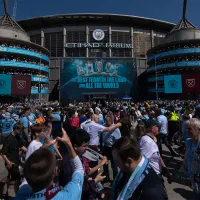
Manchester City have become used to winning the Premier League under Pep Guardiola and achieved back-to-back titles for the first time in their history in 2017/18 and 2018/19. Outside of Manchester United’s stranglehold in the Alex Ferguson era and City’s own run of four in a row, successive Premier League wins are not the norm.
City won the 2017/18 title with an abnormal 100 points from 32 wins and scored 106 goals. Ederson changed the game. Kevin De Bruyne and David Silva were magnificent. Sergio Aguero scored 21 times, Raheem Sterling 18 times, and Guardiola simply seemed to have cracked the code. City didn’t make it to 100 points the next season, settling instead for 98 points and a remarkable domestic treble – but it was in the halo of their domestic treble in 2019 that he made them a dynasty. Guardiola won domestic trophies for fun, craving all the while a maiden European Cup victory for the club.
They did it in style in 2022/23, winning the Champions League as part of another incredible treble and doing so without Vincent Komany, without Fernandinho or Yaya Toure, without Sergio Aguero. Guardiola had new giants, a new goal machine, and a Ballon d’Or winner. Boy, did he make the most of them.
13. Netherlands, 1974-78

In the final they netted before West Germany got a kick, but fatally failed to grab a second and lost to Gerd Muller’s seven-yard swiveller. The point still remains: perhaps no runner-up has ever been more beloved in any sport, ever, than the Netherlands side of the 1970s.
This was a thinking man’s side, comprising several members of the Ajax Totaalvoetbal side which won three successive European Cups from 1971 to 1973: the masterful Johan Cruyff, versatile defender Ruud Krol, nippy back Wim Suurbier, explosive midfielder Arie Haan, classy playmaker Johan Neeskens, brainbox winger Piet Keizer and lethal forward Johnny Rep. En route to the 1974 final the Dutch scored 14 and conceded just one in powering past Uruguay, Bulgaria, Argentina, East Germany and Brazil; only Sweden stopped them scoring.
The ideas are still used today. A high line, a high press, compacting the pitch and exploiting space where you can. But more than that, this was a side that captured the imagination for what they meant. The togetherness of positional fluidity, the tactical vertigo they'd inflict on their opponents and the sheer expressionism of 11 orange-clad Dutchmen jamming as one. It was like watching the football equivalent of Amsterdam-born prog-rockers Focus.
Euro 76 was a letdown and Cruyff retired from internationals just before Argentina 78; the Dutch still made the final, but two goals in extra time brought the hosts victory.
12. Bayern Munich, 1967-76
If a single team can create an entire club, then this side laid the foundation for the dynasty we know as Bayern Munich. When Franz Beckenbauer and Sepp Maier, both in their early teens, joined the club’s youth set-up in 1959, Bayern weren’t even the top club in their own city – 1860 Munich were more popular and successful. That turned out to be a blessing in disguise, allowing a baby-faced team to gel, grow and learn outside the spotlight.
In 1964 a young, chubby striker by the name of Gerd Muller signed for Bayern, because he thought he’d never break into 1860’s star-studded side. At the end of his first season, Bayern were promoted and that was that: from then, their upward trajectory felt limitless, the Bavarians winning four league titles and three European Cups in nine years.
11. Hungary, 1950-56

The Magical Magyars came together under Gusztav Sebes, a cobbler’s son who advocated “socialist football” – a Total Football precursor in which players could swap positions at will.
Almost unbeatable – between May 1949 and February 1956 they lost just twice – Hungary won the 1952 Olympics and were invited to Wembley for a November 1953 friendly. Deploying centre-forward Nandor Hidegkuti in a deep-lying role, they hammered England 6-3; the English demanded a rematch, and were duly walloped 7-1.
The 1954 World Cup should have been their coronation. They hammered South Korea 9-0 and West Germany 8-3, eased past Brazil 4-2 in a bruising quarter-final and beat holders Uruguay 4-2 in a flowing semi to reach a final against West Germany’s amateurs. Astonishingly, the outsiders came from 2-0 down to win in disputed circumstances.
While the Netherlands claim the title of the greatest side to have never won the World Cup, Hungary dispute it. They've been somewhat lost to the history books – perhaps because their grand final loss didn't come in technicolour with a Telstar. But the legacy of the Mighty Magyars is one of a side who didn't just entertain, they terrified.
10. Santos, 1955-68
Not many teams can boast nine World Cup winners. And only one had the “The Athlete of the Century” up front during his peak.
This is why Pele’s Santos feared no side, dominating the Brazilian league when it was at its strongest. Their motto was simply unrefined: “if the opposition scores once, we will score three.”
It didn’t matter if the opposition were a local side or the almighty Benfica at the Stadium of Light. This swashbuckling arrogance was especially evident in 1962 and 1963, when they won the Intercontinental Cup twice (Benfica and Milan), and prevailed in legendary match-ups against Garrincha’s Botafogo – encounters that were so fluid they could have been a work of art.
9. Benfica, 1959-68

Restless Hungarian genius Bela Guttmann had a simple credo for building teams: “Give the public their money’s worth.” That philosophy came to glorious fruition in the Benfica side he created.
Playing an attacking 4-2-4 or the W-M formation with five up front, the Eagles reached four European Cup finals in seven years, winning in 1961 and 1962, and dominated the Portuguese league by hoovering up seven titles between 1960 and 1968. It was a team that would end the Real Madrid monopoly of continental football with a physical, vertical brand of football that exploited numerical superiority and made Di Stefano and his boys look tired in comparison.
The success of a team that became known as O Glorioso Benfica is often reductively attributed to one transformational genius, Eusebio. Yet the side’s most influential player, also born in Mozambique, was Mario Coluna: the Sacred Beast, who became the complete modern midfielder, a master strategist with an explosive left-foot shot. Jose Aguas and Antonio Simoes, meanwhile, would all chip in, with Benfica's side forming the basis of a 1966 World Cup team that would reach the semi-finals in England.
Of course, this club would never scale such heights again. Legend has it that Guttmann walked out of the club telling his bosses that, “Not in a hundred years from now will Benfica ever be European champion again.” He was that kind of bloke: in 1948, he was so furious with defender Mihaly Patyi that he ordered him to stay in the dressing room at half-time and for his Honved side to play with 10 men. Ferenc Puskas defied his boss, telling Patyi to ignore him. Guttmann saw he'd been undermined, left town and never returned.
Sure enough, Benfica have been to eight European finals since. They're yet to repay the debt.
8. Inter Milan, 1962-67
The team that defined the way we still think about Italian football. Argentine boss Helenio Herrera didn’t invent catenaccio, but his modified version – a 5-3-2 with a libero behind the defence and half-backs launching speedy counter attacks – was implemented so precisely that his side came to embody it. Herrera’s men won three Serie A titles, and back-to-back European Cups in 1964 and 1965.
While there were some brilliant performers in the side – Armando Picchi the all-important sweeper, rock solid full-backs Tarcisio Burgnich and Giacinto Facchetti, Luis Suarez a fine playmaker, Jair, Mario Corso and Sandro Mazzola forming a harmonious yet devastating midfield – this Grande Inter side were always seen as Herrera’s baby.
7. Liverpool, 1975-84

The year after taking over from Bill Shankly, Bob Paisley’s team finished second in the 1974/75 table. “I considered it a real failure,” admitted the new gaffer. “We never celebrate second place here.”
He hardly ever had to again: over the next eight seasons, the Reds won the league seven times, along with four European Cups and four League Cups, creating England’s first genuine football dynasty. Shankly was said to find it difficult to let go, turning up at training even in retirement, and claiming that the Reds were in such a fit state upon his exit that, “I could have left a monkey in charge”.
Of course, he didn't give them the credit that they truly deserved. In English football at least, this was the birth of football heritage, long before Jose Mourinho coined it: a team that embraced collective psychology, the strength of the Kop, ‘King’ Kenny Dalglish in attack (as much as a superstar as this side needed) and, naturally, the idea that ‘Club DNA’ mattered above all else. While other clubs looked to import success from other managers, Liverpool's success was bred from the Boot Room, the place where decades of combined tactical intelligence was honed, embracing the continental style of building play with Alan Hansen, while leaning on a Scottish enforcer in Graeme Souness to destroy and dictate.
That they did it while remaining so well-liked by neutrals is remarkable, and a testament to a thrilling brand of pass-and-move play. Shankly had called it “a simple game based on the giving and taking of passes.” His successors honed it to perfection.
6. Real Madrid, 1955-60
The influence of this team extends far beyond the talent of Di Stefano, Ferenc Puskas, Raymond Kopa and Paco Gento. Far beyond even the trophies they accumulated – and no other team has won five European Cups in a row, as they did, from 1956 to 1960.
This team, Alex Ferguson said once, invented the idea of a modern football club, signing the best players regardless of nationality, becoming synonymous with a particular style of football, and seizing the opportunity provided by the new European Cup to create a global brand. The tawdry magnificence of the galactico era can be traced back to this polyglot side. This Madrid side, as Santiago Bernabeu said of Di Stefano, smelled of good football.
5. Spain, 2007-12

There was a time when Spain were football’s great underachievers, but at Euro 2008 it all came together. And they did it with a tiki-taka so beautiful that the rest of the world tried desperately to copy them.
Uniting a previously disparate squad, Luis Aragones harnessed possession-minded midfielders like Xavi, Andres Iniesta, David Silva and Cesc Fabregas, and married the aesthetic to the athletic as La Roja secured the trophy. Aragones was then replaced by Vicente del Bosque, who encouraged his players’ confident domination of possession, as typified by Pep Guardiola’s iconic Barcelona side; Spain swept to the World Cup with a perfect qualification record, then went all the way in South Africa.
They did it again at Euro 2012 – and perhaps that was the most impressive. With no striker, Del Bosque played 4-6-0 with half a dozen midfielders, Fabregas as a false nine and simply relied on movement and IQ. It wasn't the most devastating version of that team; it wasn't the most lovable. But it was pure proof of a philosophy so rock-solid that the Spanish could lean into it and still pass everyone else to death.
They'd bow out on three. At Brazil 2014, Spain lost 5-1 to the Netherlands and were home before the postcards. They're still the most cohesive that an international team has looked this century.
4. Ajax, 1965-73
In coach Rinus Michels, the club’s trademark 4-3-3, chaotic position switching and teamwork was established; Total Football invented. When he left in 1971, replacement Stefan Kovacs afforded the team yet more attacking freedom.
Drifting centre-forward Johan Cruyff was the undoubted star, conducting his orchestra with typical pomp. Johan Neeskens provided midfield legs, Arie Haan and Gerrie Muhren the tactical discipline, centre-back Velibor Vasovic the Yugoslav steel.
Over 40 years since their pinnacle – a 1-0 win against Juventus to secure the 1973 European Cup, their third in a row – Ajax’s 4-3-3 remains football’s most flexible formation. But it’s the way they made you feel – the long hair, rockstar swagger and beautiful play – that sets them apart.
3. Barcelona, 2008-11

In 50 years’ time, when most of us will be eating through a straw, we can die happy that we saw one of the greatest sides ever performing at the apogee of their celestial talent.
And to think that it may have never happened, had Barça appointed Jose Mourinho as manager. Instead, they opted for Pep Guardiola, promoting him from the B-team, who invited his La Masia talents to take over the world. In introducing tiki-taka – originally intended as an insult – to the footballing lexicon, they rewrote the beautiful game’s playbook in their own, perfectly formed 4-3-3 image. Juego de Pocision penetrated just about every corner of football: it was unstoppable.
Winning an unprecedented sextuple in his first season, Pep achieved Nirvana by moving Lionel Messi infield. The 3-1 victory against Manchester United in the 2011 Champions League Final – “no one has given us a hiding like that,” admitted Alex Ferguson – merely confirmed what Real Madrid legend Jorge Valdano calls a “miracle generation”.
2. Milan, 1987-91

Once we reach our mid-20s – late 30s, for the dreamers – and we realise that a professional football career is potentially out of reach by now, Arrigo Sacchi is what all of us secretly dream of becoming. He was a shoe salesman who changed the game, famously telling reporters that just because he wasn't a horse, he could still become a jockey.
It was all foretold by TV mogul Silvio Berlusconi, arriving in a helicopter at the training ground in 1986 after buying Milan and saving the club from bankruptcy. The future Italian president promised the world, and the club didn't disappoint: playing a Total Football-tinged, high-pressing 4-4-2, Sacchi’s side – which featured Dutch trio Ruud Gullit, Marco van Basten and Frank Rijkaard, with Franco Baresi and Paolo Maldini minding the shop in defence – dominated opponents physically and tactically.
For two years, they'd dominate the Ballon d'Or, let alone European football. In the 1988/89 European Cup, they humiliated Real Madrid 5-0 in the semi-final second leg and Steaua Bucharest 4-0 in the final. Some argue the team that retained the trophy in 1990, letting in just three goals, was even more cultured.
Italy’s most successful European campaigners have enjoyed several stellar vintages, but the perfect storm of style and success came in a four-year flurry that blew away Italy’s boring football reputation.
1. Brazil, 1970

Brazil had had good sides before, but the team that swaggered to glory in 1970 will forever occupy a prominent place in the pantheon. It had to be them, didn't it?
After being hoofed out of the 1966 tournament, Pele was at his peak in a team of showstoppers. Alongside him up top was Tostao, with Roberto Rivellino and Jairzinho providing the ammunition from the flanks. Yes, the team had flaws. The back half wasn’t great, conceding against everyone but England. Yet even holding midfielder Clodoaldo dribbled past four Italians during a final that’s etched into legend as representing jogo bonito, the beautiful game, prioritising inventive attack over canny defence.
But this wasn't a team that was built on talent alone. Brazil arrived in Mexico weeks before the 1970 tournament to acclimatise to the thin air, using NASA tests to up their fitness levels. During the World Cup, they'd explode in the last 15 minutes when opponents were tiring.
Football would look so different without this team. The flying full-backs would become a Brazilian staple – Carlos Alberto's stunning volley would pave the way for Cafu and Carlos to come – while the integration of five no.10s into one XI looked impossible, but was implemented with each of them actually complementing one another.
For some, this side is the reason we call it the beautiful game. Collective technical perfection. For Pele's swansong, they had to do something special.

