



Identifying the best football teams of all time is a major undertaking and it only gets more difficult as the seasons pass.
How is it measured? What makes one team better than another? Where on earth do today’s best teams fit in, and what does that say about the importance or otherwise of legacy? Take Arsenal and Manchester City in 2025/26. The Gunners are favourites to win the Premier League and have been utterly dominant in the Champions League. Man City are keeping pace with them in a two-horse title race but Mikel Arteta could end the season with multiple trophies. Could either of them find their way into a list of this magnitude?
Well, FourFourTwo thrives on making the tough decisions. Each staff member armed with their personal favourites, we gathered in a darkened room one evening to narrow things down. Deliberations continued long into the night. In between the bickering, name-calling and hair-pulling, one thing became apparent – this list had to be about more than just cold, bare trophy hauls.
How FourFourTwo's expert panel decided the greatest teams of all time
The only way to come up with a ranking that’s remotely meaningful is to set the parameters out at the start and be clear about why those criteria matter. ‘Best’ can mean many things, after all. Football is also about intangibles: how cool a team is; what effect they have on future generations; their aura.
At FourFourTwo, we care about the impact these teams have on the game at large. Every title and trophy is won by someone, but not every winner has an influence on football beyond their own immediate success. Domination is a factor, of course, but the x-factor counts for a lot. With a few exceptions, teams were considered and debated based on their performance over years rather than months.
A single season can be enough but usually it takes time and reflection to achieve true historical greatness. Nevertheless, outright brilliance got some of these teams a place too. You won't find too many one-season wonders in this list, but there's room for a special few…
Oh, and it should be obvious that this ranking is relative, not absolute. Teams are included based on their real context, how good they were and what they did in their actual time, not whether they’d beat Arsenal today.
50. Leicester City, 2015/16

You won’t find many one-season wonders in this list, but such was the magnitude of Leicester’s title triumph that it’s hard to exclude them.
Claudio Ranieri produced a near-perfect team that achieved immortality in arguably the world's strongest league. How else could they have managed to topple England’s illustrious elite just 12 months after barely surviving the drop?
Leicester had their outstanding stars – Jamie Vardy had a direct hand in 36 goals, Riyad Mahrez 29, while N’Golo Kante proved a revelation in midfield. But their real strength was the collective bond, which helped them eke out big results when the pressure was at its most intense.
But aside from what made them so memorable – the ridiculousness of such underdogs triumphing against all the odds, getting Gary Lineker to strip down to his boxers for Match of the Day – we all loved Leicester because they were reminiscent of everything that we knew and loved about English football. A flat-pack 4-4-2 formation, with two all-rounders in the middle, a little genius on one flank, a workhorse on the other, and a front two who ran themselves into the ground for the cause. Isn't that what football is all about? Well, it is on these shores, all right.
49. England, 1966
Biased much? Well… the vintage of 60 years ago that we sing songs about on the terraces are one of the most impactful football teams of all time – on this little island or otherwise.
While Brazil or the Netherlands will point to their teams being the epitome of pure individual skill, that's not the English DNA: the Three Lions pride themselves on organisation, first and foremost, and with Alf Ramsey's ‘Wingless Wonders’, the home team at the ‘66 World Cup were an outlier amid the plethora of 4-2-4s that would become referenced for decades.
Ramsey was one of the first tracksuit coaches of the game, pioneering what would eventually look like a diamond midfield under Carlo Ancelotti, and it was a system that was, actually, incredibly modern-looking, with a ball-winning midfielder in Nobby Stiles, the obvious superstar of the side Bobby Charlton in a free role in attack and a ‘hybrid’ role for Martin Peters to drift where he was needed, before ghosting into the box to score. Tactical flexibility? Check. Legacy? Check. Star power? Check. English bias? No, not at all.
48. Real Madrid, 2000-02
Real Madrid have won countless trophies but few in the modern era were as watchable as the league titles and Champions League wins they achieved under Vicente del Bosque. He won two of each with a superstar team that boasted Iker Casillas, Claude Makelele and Guti.
Luis Figo, Fernando Morientes and Steve McManaman at his very best were electric, and Real Madrid legends don’t come much bigger than Fernando Hierro and Raul. After winning La Liga in 2001, Del Bosque was rewarded with the signing of Zinedine Zidane. They won the Champions League together in the Frenchman’s first season, Zidane scoring one of the competition’s most famous goals in the final.
47. Wolverhampton Wanderers, 1953-60

Clad in classic old gold, Stan Cullis's uncompromising and direct team powered their way to three league titles in nine years from 1953 onwards, missing a hat-trick of First Division titles and the FA Cup-League Double by just a point in 1959/60.
With a heavy emphasis on fitness and strength, Wolves' method of pumping long balls out of defence for their forwards to chase may have been dismissed as 'kick and rush' tactics, but in their nine peak success years they plundered 878 goals and topped the century mark in four consecutive First Division seasons.
46. Chile, 2014-16
Chile shocked world champions Spain to qualify from their group at the World Cup in Brazil in 2014 and it was a sign of successes to come. The host nation beat them on penalties in the round of 16 but Chile head coach Jorge Sampaoli still had a few tricks up his sleeve.
La Roja, fronted by record scorer and most-capped player Alexis Sanchez, won the Copa America in each of the next two years. In 2015, they beat Argentina on penalties to win a home final in Santiago. In 2016, Copa America Centenario in the United States gave them a chance to defend their title immediately.
Sanchez and back-to-back top scorer Eduardo Vargas starred again and Sampaoli’s team did exactly that to double up on their first continental title at the first time of asking.
They must have been special: they're the only team that ever made Lionel Messi question his place in the game, with the GOAT retiring in the anguish of that second final disappointment.
45. Chelsea, 2004-06
Jose Mourinho mixed the best of Claudio Ranieri's team (John Terry, Frank Lampard, Damien Duff and Claude Makelele) with those already incoming for his debut campaign (Petr Cech and Arjen Robben), bringing in Didier Drogba and Ricardo Carvalho with Roman Abramovich's petrodollars to add a more physical, quicksilver and devastating edge to an already talented team.
The Blues won successive titles in 2005 and 2006 (the former by 12 points with a brand of pressure football that earned them begrudged respect from non-Chelsea fans. But there's one stat that stands head and shoulders above any other from that group.
They conceded just 15 goals in the 2004/05 season. 15. that's a record that no only may never be beaten, no other champions may even come close to that. It's a simply astounding reflection of just how good that backline really was, with the likes of Carvalho, Terry and Cech losing just one game all season. The standard to which all other defences are meas
44. Hamburg 1977-83

Hamburg had always been on the periphery of the German football elite until two tireless workers came together just after the club won its first European trophy in the 1977 Cup Winners’ Cup.
Liverpool’s European Cup-winning star Kevin Keegan and coach Branko Zebec both trained ferociously, the latter so much so that his players were in open revolt after losing the 1980 European Cup Final to Brian Clough’s Nottingham Forest.
Though it would be the Croatian manager’s drinking that marked his downfall, the squad’s unflinching desire to run further and faster than the opposition brought three Bundesliga titles in four seasons, plus the 1983 European Cup against Juventus.
43. Tottenham, 1960-62
With strikers Bobby Smith and Les Allen notching goals for fun, the prodigiously gifted inside-forward John White dismantling opposition defences with his blind-side runs and midfield anchored by the rock-like Dave Mackay, Tottenham romped to the title by eight points (in the days of two for a win) in 1960/61, then defeated Leicester in the FA Cup final.
Some said Spurs would be one-season wonders, and manager Bill Nicholson feared they had a point. So he added goal machine Jimmy Greaves, retained the FA Cup and reached the European Cup semi-final – where they were denied in part by suspect refereeing.
42. Steaua Bucharest, 1984-89
Truth is a rare commodity when it comes to former dictator Nicolae Ceausescu’s Romania. Yet for all the accusations of dictatorial favouritism that dogged Steaua Bucharest in the late ‘80s, the Militarii did go 104 domestic games unbeaten from June 1986 until September 1989.
Steaua were like a Romanian Harlem Globetrotters, led by Victor Piturca and Miodrag Belodedici’s graceful artistry. When they signed Gheorghe Hagi just for the 1986 European Super Cup, Ceausescu refused to allow the Maradona of the Carpathians back to Sportul Studentesc.
They also got to two European Cup finals, beating Barcelona on penalties in 1986 before losing 4-0 to Milan two years later.
41. Leeds United, 1968-75

In the Elland Road dressing room, manager Don Revie nailed a sign to the wall which read: 'Keep fighting.'
His Leeds team, combining ruthless pragmatism with a shimmering of skill, did precisely that as football entered the technicolour age. After capturing their all-important first trophy in 1968 (the League Cup), Leeds went on to win two League titles, two Fairs Cups and the FA Cup in 1972.
Johnny Giles, Billy Bremner, Norman Hunter and Jack Charlton earned the team its 'mean machine' tag, while Peter Lorimer's spectacular shooting, Eddie Gray's skilful wing play and Allan 'Sniffer' Clarke's goalscoring exploits gave the Whites their cutting edge up front.
They could have had more, too, controversially losing a European Cup final to the mean Bayern Munich machine of the mid-70s who swept three of the trophy in a row. History doesn't always remember the runners-up – but even that iteration of this side was one of the most complete English teams of all time.
40. Arsenal, 1930-35
When the W-M formation was first deployed, there were serious concerns. But not from the terraces.
Herbert Chapman's Arsenal team routinely flattened opponents at their Art Deco, palatial Highbury home in the early '30s with a fast, direct and uncompromising brand of football. Was it particularly sporting, some wondered, that Chapman would be so bold as to give one player the role of defending? Sort of went against the spirit of the game.
The Gunners had a blueprint for the 'eight-second goal.' It sounded almost too easy, but Chapman's men – who won the FA Cup in 1930 and the league championship a year later – preferred to keep things simple, and devastatingly effective. It was a team of superstars, too, from Alex James, a graceful playmaker perma-donned in baggy shorts, to Cliff Bastin, a wonderkid poacher who set an almost 70-year scoring record in North London that could have become virtually unsurpassable, if not for his early retirement.
Following Chapman's untimely death from pneumonia, his successor George Allison added a more physical edge. But Arsenal lost none of their potency, completing a hat-trick of title triumphs in 1935.
39. Ajax, 1992-96

When Louis van Gaal took over in 1991, Ajax had won one European trophy – the 1987 Cup Winners’ Cup – since the 1970s’ golden era of Michels and Cruyff.
The situation wasn’t as dire as it looked. The side that won the 1992 UEFA Cup starred Dennis Bergkamp, Danny Blind, Wim Jonk, Aron Winter and Frank de Boer. The team that won the 1995 Champions League – earning Van Gaal his move to Barcelona – featured Edwin van der Sar, Frank Rijkaard, Edgar Davids, Clarence Seedorf, Patrick Kluivert, Jari Litmanen and Marc Overmars.
Playing a 3-4-3 or 3-1-2-3-1, Van Gaal’s players enjoyed less freedom than Ajax’s Total Football stars, yet were regularly devastating.
38. Budapest Honved, 1950-55
In the mid-1950s, Honved were the team the world wanted to watch. Coached by Gusztav Sebes, the architect of the Mighty Magyar side that beat England 6-3 at Wembley, Honved became an R&D lab where new tactics were honed, inspiring Brazil’s World Cup winners in 1958 and Rinus Michel’s Total Football.
With their movement off the ball, interchanging positions and clever passing, Honved played a kind of football that seemed to come from outer space. They could only do so because Sebes could call on such greats as Ferenc Puskas, Sandor Kocsis, Jozsef Bozsik, Zoltan Czibor and Gyula Grosics, who helped Honved to five titles in seven years.
37. Brazil, 1982

Rarely can a team that achieved so little have been held in such high regard by so many for so long.
The Observer’s Hugh McIlvanney called Tele Santana's tournament favourites “the most gifted collection of footballers in the game, the unmistakable nucleus of a great team.”
Santana eschewed the failed 1970s Seleçao aesthetic of aping European muscularity, instead entrusting ball-players like Flamengo fantasista Zico, laconic left-sider Eder, Roma playmaker Falcao and iconic smoking doctor Socrates.
Brazil sizzled in Seville, beating the Soviet Union 2-1 before steaming past Scotland (4-1) and New Zealand (4-0). Argentina were then beaten 3-1 but disaster struck when they lost 3-2 to a limited but organised Italy. Zico called it “the day football died”.
36. Feyenoord, 1968-71
Common football lore has it that Ajax invented the modern 4-3-3 at the same time as inventing Total Football. Well, those pioneering Amsterdammers may have done the latter, but they certainly didn’t do the former.
That was their great rivals Feyenoord, who won two Eredivisie titles and the 1970 European Cup. Perhaps British eyes were opened by the way that the Rotterdam outfit ran rings around Celtic's Lisbon Lions – but back in the Netherlands, it was all about a one-on-one between the nation's two great giants.
It was a 1970 Dutch Cup game that persuaded Ajax's Rinus Michels to revert from his hitherto-favoured 4-2-4 formation. Ajax ultimately drew level, but Feyenoord gaffer Ernst Happel had delivered the tactical masterstroke of dropping a forward back into the midfield that would come to define Dutch football.
“The game always unfolds in the midfield,” Happel reasoned, a philosophy which has dominated football ever since.
35. Manchester United, 1965-68
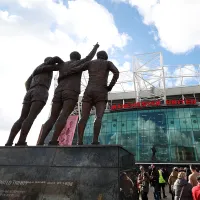
Ten years after the Munich air crash wiped out the Busby Babes, Matt Busby's Manchester United triumphed 4-1 at Wembley against Benfica in the 1968 European Cup Final in one of the most emotive nights in the history of British football.
After winning the title in 1964/65 and then again in 1966/67, Busby's third great United side finally grabbed the biggest prize of all. With the holy trinity of Best, Law (although he missed the final due to injury) and Charlton – arguably the finest trio of forwards ever accumulated in one club attack – pulling the strings, Old Trafford was the place to be in the swinging ‘60s.
34. River Plate, 1941-47
The Maquina were probably South America’s greatest club side. That nickname – the Machine – refers to a stellar attack of Julian Carlos Munoz, Jose Manuel Moreno, Adolfo Pedernera, Angel Labruna and Felix Loustau which only played 18 games together.
The moniker is metaphorically accurate as, with other stars coming through (keeper Amadeo Carrizo, midfielder Nestor Rossi and Alfredo Di Stefano), River Plate were spectacularly efficient, beating local rivals Boca Juniors 5-1 in 1941. After winning three Argentine titles in five years, Pedernera left. Even so, River won the league in 1947. It was a national players’ strike – persuading Di Stefano and Rossi to make lucrative moves to Colombia – that wrecked them.
33. France, 1982-86

Remember Platini not as a UEFA suit but one of the finest players to ever lace up boots. Numerically and positionally a No.10, he was simply the most unstoppable force in the game at the time, winning three Ballon d'Ors on the trot and being the face of arguably the first France national side that would truly light up the sport, carrying such a legacy that the 2006 bunch were essentially the first since Platini's vintage to do anything on foreign soil.
Nothing's new – and long before Pep Guardiola innovated football with a box midfield, it was Platini who showed exactly what kind of numerical superiority could be had in the centre of the park, alongside Alain Giresse, Jean Tigana and Luis Fernandez in Les Bleus’ “Carre Magique” (Magic Square) that waltzed away with the Euro 84 crown on home turf.
Like so many French sides, however, they might have achieved more. At Spain 82, Michel Hidalgo’s team had reached the semi-finals only to be brutally halted by the West Germans – brutal being the word, given that challenge on Patrick Battiston. Four years later in Mexico, having knocked out holders Italy and the mighty Brazil, the European champions were again stopped in the semis by their Teutonic neighbours – denying the planet a Platini-Maradona face-off in the final.
Over time, Platini's memory would fade to be replaced by ever more eccentric blue icons and geniuses of a similar ilk, in messeurs Cantona, Zidane, Henry, Griezmann and Mbappe. But few other French sides captivated as the 80s collection did.
32. Juventus, 1994-98
When Juventus won the Champions League in 1996, players wept with joy. Marcello Lippi’s Bianconeri were indisputably the best in Europe – they had swept aside Borussia Dortmund and Real Madrid, before beating Ajax on penalties after winning the first of three Serie A titles in four years. They would also reach two more Champions League finals, losing both.
Yet this golden era was tarnished by revelations that players were routinely given prescription drugs and antidepressants, even if they didn’t need them. Does this negate the team’s feats? Either way, Lippi’s team was brilliantly engineered, featuring the finest forwards in Europe – Alessandro Del Piero, Fabrizio Ravanelli, Alen Boksic, Pippo Inzaghi, Gianluca Vialli and Zinedine Zidane.
31. Arsenal, 2001-04

When Arsene Wenger suggested that his side could go an entire season unbeaten, people laughed. 18 months later, Arsenal achieved it. But far more than a 49-game unbeaten run, the Gunners left their mark on English football forever, with perhaps the final free-flowing, fluid football side that the Prem would see before systems became king, first with Jose Mourinho, before Pep Guardiola and Jurgen Klopp vied for supremacy.
That Double in 2002 coupled with a gold Premier League trophy two years later are merely punctuation to the poetry that side wrote. Thierry Henry staked his claim as easily the best Premier League player of all time every week, dancing across the Highbury turf with Dennis Bergkamp, Robert Pires, Ashley Cole and Patrick Vieira for company. It was a side that could physically dominate (perhaps you were influenced, Mr Arteta?) and slice through opponents with short, sharp passes.
We'd seen nothing like it. We've seen very little like it since. And the Invincibles' title is merely just that: a word assigned to a group who gave so much more to the game than updating Preston North End's record. They were artists and expressionists.
30. Austria, 1930-36
Matthias Sindelar, known as ‘The Paper Man’ due to his frail frame, was the fulcrum of the Wunderteam assembled by manager Hugo Meisl and English coach Jimmy Hogan. All rapid passing and interchanging of positions, they might have ended Anglocentric chauvinism 21 years before Puskas’s Hungary, but ultimately lost 4-3 to England at Stamford Bridge.
Austria opted not to travel to the 1930 World Cup in Uruguay, but the Wunderteam were backed to win the 1934 World Cup in Mussolini’s Italy. However, they lost a semi-final to the hosts in questionable fashion: Sindelar was kicked while lying on the ground following an early reducer, before a disputed goal sent Italy through.
29. Nottingham Forest, 1977-80
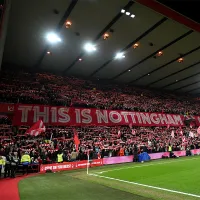
Has any team proved so much greater than the sum of its parts than the Nottingham Forest that won back-to-back European Cups under Brian Clough and Peter Taylor? This dynamic duo perfected a remorseless and entertaining good cop/bad cop act that filled their players with existential dread.
In 1977/78, newly-promoted Forest shipped just 24 goals and became the fourth – and last – team to win the league the season after winning promotion. They were as self-confident in Europe, beating Malmo and Hamburg in successive finals.
Gunter Netzer praised midfielder John McGovern’s ability to control games, while John Robertson, the team’s Picasso, greatly impressed the Italian coach Enzo Bearzot, who beamed: “When he has the ball, he can create something.”
28. Borussia Monchengladbach, 1970-79

The story of this team is a miracle. Not even the success of Brian Clough’s Forest was as improbable as the rise of this small, provincial club.
Or maybe it was destiny. After all, there seems to be no better explanation for the fact that during the short post-war era when local boys still played for their hometown clubs instead of looking for riches elsewhere, no fewer than five men who would win the 1972 European Championship with West Germany – and five Bundesliga titles and two UEFA Cups for their club – were born within a 10-mile radius around a town considerably smaller than Nottingham.
Jupp Heynckes, Gunter Netzer, Berti Vogts, Horst-Dieter Hottges and Erwin Kremers – they were all Monchengladbach lads.
27. Torino, 1945-49
Believe the hype: the Grande Torino side that perished in the Superga air disaster on May 4, 1949 really were that good. In 1947/48, they won Serie A by 16 points (in the days of two for a win), scoring 125 goals, winning 19 out of 20 home games and finishing the season with a goal difference of +92.
This ridiculously gifted side was built by local businessman – and frustrated journeyman defender – Antonio Novo, who reorganised the club and created a sophisticated scouting network. Novo’s flowing, innovative side pioneered a flexible tactical approach that anticipates the cavalier 4-2-4 with which, 10 years later, Brazil won the World Cup. The Granata won five scudetti in the 1940s before tragedy struck.
26. Boca Juniors, 1998-2004

When Carlos Bianchi took over in 1998, Boca were distinctly average. They’d won just one minor trophy in 15 years, their back-to-back Copa Libertadores victories of the late-’70s a distant memory.
Time for an overhaul. Bianchi trimmed a bloated squad and redeployed the classic Boca system: 4-3-1-2, with an eccentric goalkeeper, hard-working defenders and a disciplined midfield, all orchestrated by a mercurial No.10 (Juan Riquelme) and spearheaded by a predatory goalscorer (Martin Palermo).
It was simple, direct and intense – and it worked. Boca won the Libertadores in 2000, 2001, 2003 and reached another final in 2004, plus four league titles and two Intercontinental Cups triumphs over Real Madrid and Milan.

